
Atlasville, 02 Mar 2006
With work on my last major project temporarily suspended and only a few very short jobs in the pipeline I have a lot of time on my hands before the next full-time project starts, hopefully in May, so I will get in as much birding as I can before then.
My wife and I are just back from visiting a friend who retired a few years ago and settled in the Karoo town of Hanover in the Northern Cape. Hanover’s claim to fame is that it is 698 km from Johannesburg on the main N1 highway that links Johannesburg with Cape Town, and 699 km from Cape Town, making it the perfect overnight stop in one of the many B&B establishments that have sprung up there, which we have used ourselves in the past few years. When approaching Hanover across the very flat Karoo the first things you see are the prominent hill, Trappieskop, on the edge of town and the town’s church.
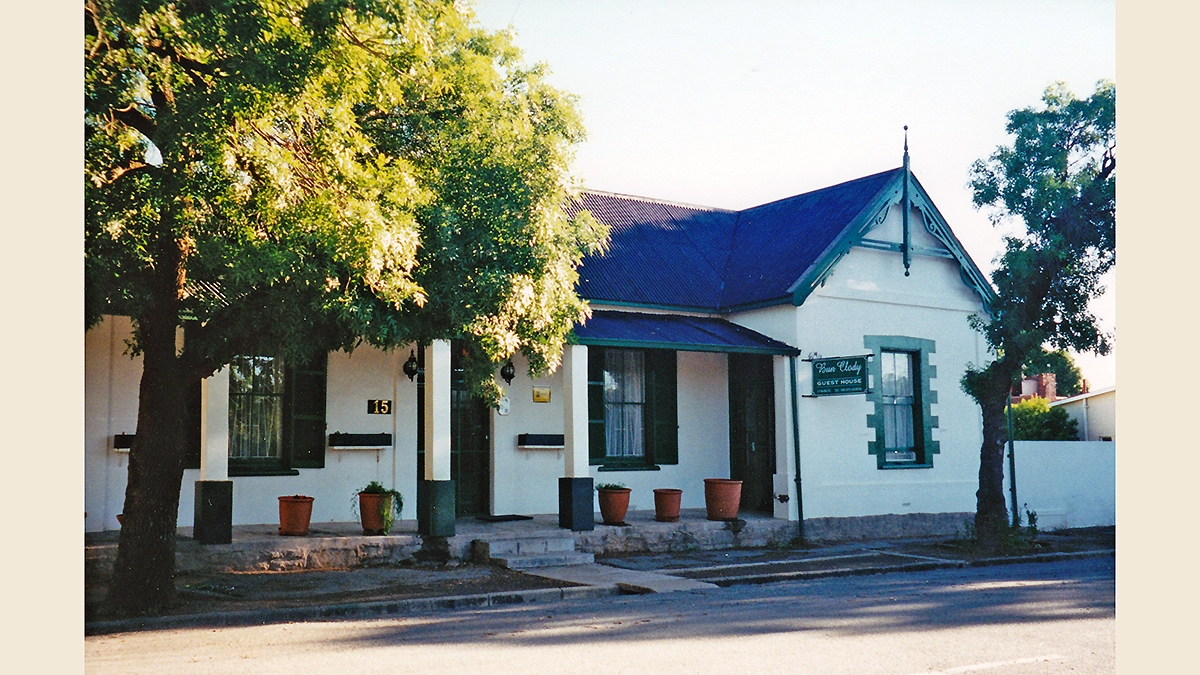
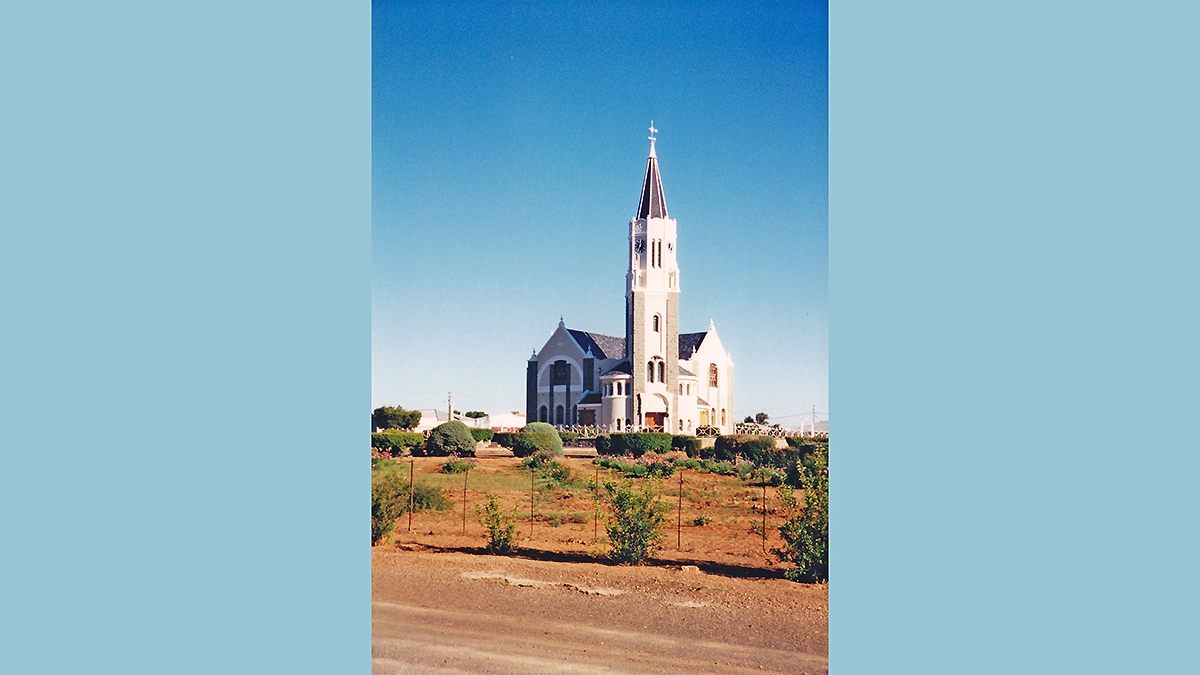
We decided to take our friend with us for 2 nights in the Karoo National Park at Beaufort West, 240 km further down the N1, somewhere we had only stayed before as an overnight stop, also between Johannesburg and Cape Town. After driving down to Hanover on 24th February, with just enough daylight left to start off the trip list with a Karoo Thrush in our friend’s garden, we would leave for Beaufort West the next morning, but not before I had fitted in 2 hours of birding from just pre-dawn until breakfast.
Taking the gravel road north out of Hanover towards Burgerville the first bird I saw atop a telephone pole was a Pale Chanting Goshawk. After adding African Red-eyed Bulbul, Ant-eating Chat, Karoo Scrub Robin, Sickle-winged Chat and Southern Fiscal I encountered a large flock (I stopped counting at 150) of migrating Lesser Kestrel adorning the telephone poles and wires over several hundred metres, presumably their overnight roost. I spent more time than I probably needed to marvelling at this spectacle so made a U-turn and retraced my steps to back to Hanover, adding among others African Pipit, Eastern Clapper Lark and Pied Starling.
After breakfast we loaded up and headed for Beaufort West. Of course we could have taken the easy route straight down the N1, but I don’t do easy, preferring whatever ‘scenic’ route can be taken. In this case we left the N1 before Three Sisters going to Victoria West, then west to Loxton and back south to Beaufort West. I had last driven that last leg taking the family to Oudtshoorn from Copperton in 1983. It’s amazing how much birding you can do at 80 kph or so, especially when the birds in question are largish raptors sitting on telephone poles – Common Buzzard, Jackal Buzzard, Black-winged Kite, more Lesser Kestrel, Rock Kestrel, Pale Chanting Goshawk and Lanner Falcon. Others you can hardly miss even at that speed and mainly at farm dams were Pied Crow, South African Shelduck, African Sacred Ibis, Egyptian Goose, Blacksmith Lapwing and African Spoonbill, as well as smaller colourful birds such as African Stonechat and Southern Masked Weaver.
We arrived at Karoo National Park with enough time to unpack and still go for a late drive from the rest camp up the Klipspringer Pass and back. We added Cape Sparrow right outside our chalet, Mountain Chat, Pale-winged Starling, White-throated Canary, Fiscal Flycatcher, Acacia Pied Barbet, Sickle-winged Chat and Grey-backed Cisticola.
![Karoo Thrush [Turdus smithi]](https://neilswildlifejournal.uk/wp-content/gallery/post-images-2004-2006/IMG_4389_20D_Hanover_24Feb2006.JPG "Karoo Thrush [Turdus smithi]")
![Pale Chanting Goshawk [Melierax canorus canorus]](https://neilswildlifejournal.uk/wp-content/gallery/post-images-2004-2006/IMG_4482_20D_HanoverBurgerville_25Feb2006.JPG "Pale Chanting Goshawk [Melierax canorus canorus]")
![Ant-eating Chat [Myrmecocichla formicivora]](https://neilswildlifejournal.uk/wp-content/gallery/post-images-2004-2006/IMG_4533_20D_HanoverBurgerville_25Feb2006.JPG "Ant-eating Chat [Myrmecocichla formicivora]")
![Lesser Kestrel [Falco naumanni]](https://neilswildlifejournal.uk/wp-content/gallery/cariamiformes-falconiformes/IMG_4545_20D_HanoverBurgerville_25Feb2006.jpg "Lesser Kestrel [Falco naumanni]")
![African Pipit [Anthus cinnamomeus rufuloides]](https://neilswildlifejournal.uk/wp-content/gallery/post-images-2004-2006/IMG_4556_20D_HanoverBurgerville_25Feb2006.JPG "African Pipit [Anthus cinnamomeus rufuloides]")
![Pied Starling [Lamprotornis bicolor]](https://neilswildlifejournal.uk/wp-content/gallery/post-images-2004-2006/IMG_4564_20D_HanoverBurgerville_25Feb2006.JPG "Pied Starling [Lamprotornis bicolor]")
![Lanner Falcon [Falco biarmicus biarmicus]](https://neilswildlifejournal.uk/wp-content/gallery/cariamiformes-falconiformes/IMG_4597_20D_VictoriaWest_25Feb2006.jpg "Lanner Falcon [Falco biarmicus biarmicus]")
![Cape Sparrow [Passer melanurus melanurus]](https://neilswildlifejournal.uk/wp-content/gallery/passeridae-ploceidae/IMG_4651_KarooNP_25Feb2006.jpg "Cape Sparrow [Passer melanurus melanurus]")
![Mountain Chat [Myrmecocichla monticola monticola]](https://neilswildlifejournal.uk/wp-content/gallery/post-images-2004-2006/IMG_4662_KarooNP_25Feb2006.JPG "Mountain Chat [Myrmecocichla monticola monticola]")
![Sickle-winged Chat [Emarginata sinuata sinuata]](https://neilswildlifejournal.uk/wp-content/gallery/post-images-2004-2006/IMG_4676_KarooNP_25Feb2006.JPG "Sickle-winged Chat [Emarginata sinuata sinuata]")
After breakfast next day we took a drive around the Lammertjiesleegte loop picking up many of the resident Karoo species, Karoo Prinia, Karoo Korhaan, Karoo Long-billed Lark, Karoo Lark, Karoo Chat, Rufous-eared Warbler, Dusky Sunbird, Lark-like Bunting, Grey-backed Sparrow-Lark and a lifer with Cape Clapper Lark. Later, while the ladies relaxed I tackled the Pointer walking trail adding White-rumped Swift, Levaillant’s Cisticola, White-necked Raven, Cape Bunting and Layard’s Warbler. An afternoon drive up the Klipspringer Pass again added Short-toed Rock Thrush, Rock Martin, White-backed Mousebird and Pale Chanting Goshawk, although the highlight of the day was my first ever sighting (and possibly only sighting given that it is rarely seen) of Grey Rhebok. Back at the chalet we still added Familiar Chat.
The following morning while the ladies slumbered I took an extended drive around the Lammertjiesleegte loop calling in at the Bulkraal picnic spot. New species for the trip were Cape Spurfowl, Bokmakierie, Sabota Lark, Fairy Flycatcher and Plain-backed Pipit. After breakfast we again took one of my ‘scenic routes’ travelling back to Hanover via Graaf-Reniet and New Bethesda, along the way adding a few more new species, Grey-winged Francolin, Spike-heeled Lark and South Africa’s national bird the Blue Crane.
![Karoo Korhaan [Eupodotis vigorsii vigorsii]](https://neilswildlifejournal.uk/wp-content/gallery/musophagiformes-otidiformes-cuculiformes-pterocliformes/IMG_4721_20D_KarooNP_26Feb2006.jpg "Karoo Korhaan [Eupodotis vigorsii vigorsii]")
![Rufous-eared Warbler [Malcorus pectoralis pectoralis]](https://neilswildlifejournal.uk/wp-content/gallery/macrosphenidae-cettidae-aegithalidae-phylloscopidae-acrocephalidae-locustellidae-donacobiidae-cisticolidae/IMG_4741_20D_KarooNP_26Feb2006.jpg "Rufous-eared Warbler [Malcorus pectoralis pectoralis]")
![Grey-backed Sparrow-Lark [Eremopterix verticalis verticalis]](https://neilswildlifejournal.uk/wp-content/gallery/post-images-2004-2006/IMG_4768_KarooNP_26Feb2006.JPG "Grey-backed Sparrow-Lark [Eremopterix verticalis verticalis]")
![White-rumped Swift [Apus caffer]](https://neilswildlifejournal.uk/wp-content/gallery/post-images-2004-2006/IMG_4773_KarooNP_26Feb2006.JPG "White-rumped Swift [Apus caffer]")
![Cape Bunting [Emberiza capensis cinnamomea]](https://neilswildlifejournal.uk/wp-content/gallery/post-images-2004-2006/IMG_4788_KarooNP_26Feb2006.JPG "Cape Bunting [Emberiza capensis cinnamomea]")
![Layard's Warbler [Curruca layardi subsolana]](https://neilswildlifejournal.uk/wp-content/gallery/sylviidae-zosteropidae-timaliidae-leiothrichidae-promeropidae-irenidae-troglodytidae/IMG_4792_20D_KarooNP_26Feb2006.jpg "Layard's Warbler [Curruca layardi subsolana]")
![Pale Chanting Goshawk [Melierax canorus canorus]](https://neilswildlifejournal.uk/wp-content/gallery/post-images-2004-2006/IMG_4796_KarooNP_26Feb2006.JPG "Pale Chanting Goshawk [Melierax canorus canorus]")
![Blue Crane [Grus paradisea]](https://neilswildlifejournal.uk/wp-content/gallery/gruiformes/IMG_4870_NewBethesda_27Feb2006.jpg "Blue Crane [Grus paradisea]")
![Familiar Chat [Oenanthe familiaris familiaris]](https://neilswildlifejournal.uk/wp-content/gallery/turdidae-muscicapidae-cinclidae-chloropseidae-dicaeidae/IMG_4811_20D_KarooNP_26Feb2006.jpg "Familiar Chat [Oenanthe familiaris familiaris]")
![Grey Rhebok [Pelea capreolus]](https://neilswildlifejournal.uk/wp-content/gallery/ungulates/IMG_4803_20D_KarooNP_26Feb2006.jpg "Grey Rhebok [Pelea capreolus]")
Next day the ladies decided just to leave me to do my own thing, so surprise, birding it was. The morning route took me west out of Hanover on a gravel road before striking north to intercept the N10 and head back down to Hanover. Almost the first bird of the day was another new one for the trip list, White Stork. Next up was a repeat of the first morning in Hanover, a large flock of migrating Lesser Kestrel affording the opportunity to get photos perched and in flight. Then Lark-like Bunting, Eastern Clapper Lark, Pale Chanting Goshawk, adult and juvenile, and Spotted Thick-knee all posed nicely. Northern Black Korhaan, Booted Eagle, Nicholson’s Pipit and Namaqua Dove were all additions to the trip list. Along the way I had photographed a herd of South Africa’s national animal the Springbok.
In the afternoon I headed back up the N10, then turning north-east towards Burgerville, before returning to Hanover via the gravel road birded on the first morning. Yet more trip list additions, Greater Kestrel, Red-headed Finch and Three-banded Plover.
![White Stork [Ciconia ciconia ciconia]](https://neilswildlifejournal.uk/wp-content/gallery/post-images-2004-2006/IMG_4887_20D_HanoverWortelfontein_28Feb2006.JPG "White Stork [Ciconia ciconia ciconia]")
![Lesser Kestrel [Falco naumanni]](https://neilswildlifejournal.uk/wp-content/gallery/cariamiformes-falconiformes/IMG_4900_20D_HanoverWortelfontein_28Feb2006.jpg "Lesser Kestrel [Falco naumanni]")
![Lesser Kestrel [Falco naumanni]](https://neilswildlifejournal.uk/wp-content/gallery/cariamiformes-falconiformes/IMG_4925_20D_HanoverWortelfontein_28Feb2006.jpg "Lesser Kestrel [Falco naumanni]")
![Lesser Kestrel [Falco naumanni]](https://neilswildlifejournal.uk/wp-content/gallery/cariamiformes-falconiformes/IMG_4930_20D_HanoverWortelfontein_28Feb2006.jpg "Lesser Kestrel [Falco naumanni]")
![Lark-like Bunting [Emberiza impetuani sloggetti]](https://neilswildlifejournal.uk/wp-content/gallery/post-images-2004-2006/IMG_4945_20D_HanoverWortelfontein_28Feb2006.JPG "Lark-like Bunting [Emberiza impetuani sloggetti]")
![Eastern Clapper Lark [Corypha fasciolata fasciolata]](https://neilswildlifejournal.uk/wp-content/gallery/stenostiridae-paridae-remizidae-alaudidae/IMG_4958_20D_HanoverElandsfontein_28Feb2006.jpg "Eastern Clapper Lark [Corypha fasciolata fasciolata]")
![Pale Chanting Goshawk [Melierax canorus canorus]](https://neilswildlifejournal.uk/wp-content/gallery/accipitriformes/IMG_4990_20D_Hanover_28Feb2006.jpg "Pale Chanting Goshawk [Melierax canorus canorus]")
![Pale Chanting Goshawk [Melierax canorus canorus]](https://neilswildlifejournal.uk/wp-content/gallery/accipitriformes/IMG_4967_20D_Hanover_28Feb2006.jpg "Pale Chanting Goshawk [Melierax canorus canorus]")
![Spotted Thick-knee [Burhinus capensis capensis]](https://neilswildlifejournal.uk/wp-content/gallery/post-images-2004-2006/IMG_4971_20D_HanoverElandsfontein_28Feb2006.JPG "Spotted Thick-knee [Burhinus capensis capensis]")
![Greater Kestrel [Falco rupicoloides]](https://neilswildlifejournal.uk/wp-content/gallery/cariamiformes-falconiformes/IMG_5004_20D_HanoverBurgerville_28Feb2006.jpg "Greater Kestrel [Falco rupicoloides]")
![Red-headed Finch [Amadina erythrocephala]](https://neilswildlifejournal.uk/wp-content/gallery/post-images-2004-2006/IMG_5024_20D_HanoverBurgerville_28Feb2006.JPG "Red-headed Finch [Amadina erythrocephala]")
![Three-banded Plover [Charadrius tricollaris tricollaris]](https://neilswildlifejournal.uk/wp-content/gallery/post-images-2004-2006/IMG_5034_20D_HanoverBurgerville_28Feb2006.JPG "Three-banded Plover [Charadrius tricollaris tricollaris]")
![Springbok [Antidorcas marsupialis marsupialis]](https://neilswildlifejournal.uk/wp-content/gallery/ungulates/IMG_4965_20D_Hanover_28Feb2006.jpg "Springbok [Antidorcas marsupialis marsupialis]")
On the final morning I again left just before dawn, heading south-east towards Noupoort. In flat country like this one of the best inventions for aiding birding is the barbed wire fence! Without the birds sitting out nicely in the open they’d be very hard to see. These four all posed for the camera – Namaqua Dove, Eastern Clapper Lark, Spike-heeled Lark and Large-billed Lark. After breakfast it was straight home up the N1, no diversions with 700 km ahead of us.
![Namaqua Dove [Oena capensis capensis]](https://neilswildlifejournal.uk/wp-content/gallery/columbiformes/IMG_5039_20D_HanoverNoupoort_01Mar2006.jpg "Namaqua Dove [Oena capensis capensis]")
![Eastern Clapper Lark [Corypha fasciolata fasciolata]](https://neilswildlifejournal.uk/wp-content/gallery/stenostiridae-paridae-remizidae-alaudidae/IMG_5052_20D_HanoverNoupoort_01Mar2006.jpg "Eastern Clapper Lark [Corypha fasciolata fasciolata]")
![Spike-heeled Lark [Chersomanes albofasciata garrula]](https://neilswildlifejournal.uk/wp-content/gallery/stenostiridae-paridae-remizidae-alaudidae/IMG_5045_20D_HanoverNoupoort_01Mar2006.jpg "Spike-heeled Lark [Chersomanes albofasciata garrula]")
![Large-billed Lark [Galerida magnirostris sedentaria]](https://neilswildlifejournal.uk/wp-content/gallery/stenostiridae-paridae-remizidae-alaudidae/IMG_5053_20D_HanoverNoupoort_01Mar2006.jpg "Large-billed Lark [Galerida magnirostris sedentaria]")
The final trip list totalled 121 species.