
Atlasville, 18 Jan 2011
Back in South Africa from our 2-week Christmas and New Year visit to our family in the UK, we took the opportunity to use the weekend part of our annual week at Ngwenya Lodge before I head to Zambia in a few days time.
When we arrived at Ngwenya on Friday evening we found the Crocodile River flowing strongly, but not at a level which would close the causeway at the Crocodile Bridge entrance to the Kruger Park. However, when we arrived at the Park on Saturday morning under heavy skies, we discovered that as a result of several days of heavy rain in the southern part of Kruger, most of the gravel roads were closed. We decided to head straight up the main tar road to Lower Sabie, then on via Tshokwane all the way to Satara Camp. It was a day for ticking off all the ‘usual suspects’ and with very poor light conditions I wasn’t even going to try to do any photography with a 300mm lens plus 2x extender. That is until we left Lower Sabie. On the north bank of the Sabie River just across the causeway and a little way downriver an Osprey sat on top of a tree. The resulting images were no more than good shots for ID confirmation, but I was quite happy as this was the first time I have been able to photograph an Osprey anywhere.
We had quite a list of raptors by the time we arrived at Satara – in order of sighting, Wahlberg’s Eagle, Brown Snake Eagle, Tawny Eagle, African Fish Eagle, Osprey, Black-winged Kite, Yellow-billed Kite, Eurasian Hobby, White-backed Vulture, Lappet-faced Vulture, Bateleur and Lanner Falcon. Then on the way to Nwanetsi from Satara we added another that I don’t get a chance to photograph too often, Black-chested Snake Eagle. Not long after that I took the only other photos of the day when a pair of Double-banded Sandgrouse sat obligingly in the middle of the road. While watching the sandgrouse a Common Quail broke cover and dashed across the road, another of those infrequent sightings of which I still do not have a photo.
![Osprey [Pandion haliaetus haliaetus]](https://neilswildlifejournal.uk/wp-content/gallery/post-images-2011/CN8E7420_EOS-1D_LowerSabieWeir_15Jan2011.jpg "Osprey [Pandion haliaetus haliaetus]")
![Double-banded Sandgrouse [Pterocles bicinctus multicolor]](https://neilswildlifejournal.uk/wp-content/gallery/musophagiformes-otidiformes-cuculiformes-pterocliformes/CN8E7468_EOS-1D_NwanetsiRoad_15Jan2011.jpg "Double-banded Sandgrouse [Pterocles bicinctus multicolor]")
![Double-banded Sandgrouse [Pterocles bicinctus multicolor]](https://neilswildlifejournal.uk/wp-content/gallery/musophagiformes-otidiformes-cuculiformes-pterocliformes/CN8E7470_EOS-1D_NwanetsiRoad_15Jan2011.jpg "Double-banded Sandgrouse [Pterocles bicinctus multicolor]")
![Black-chested Snake Eagle [Circaetus pectoralis]](https://neilswildlifejournal.uk/wp-content/gallery/accipitriformes/CN8E7466_EOS-1D_NwanetsiRoad_15Jan2011.jpg "Black-chested Snake Eagle [Circaetus pectoralis]")
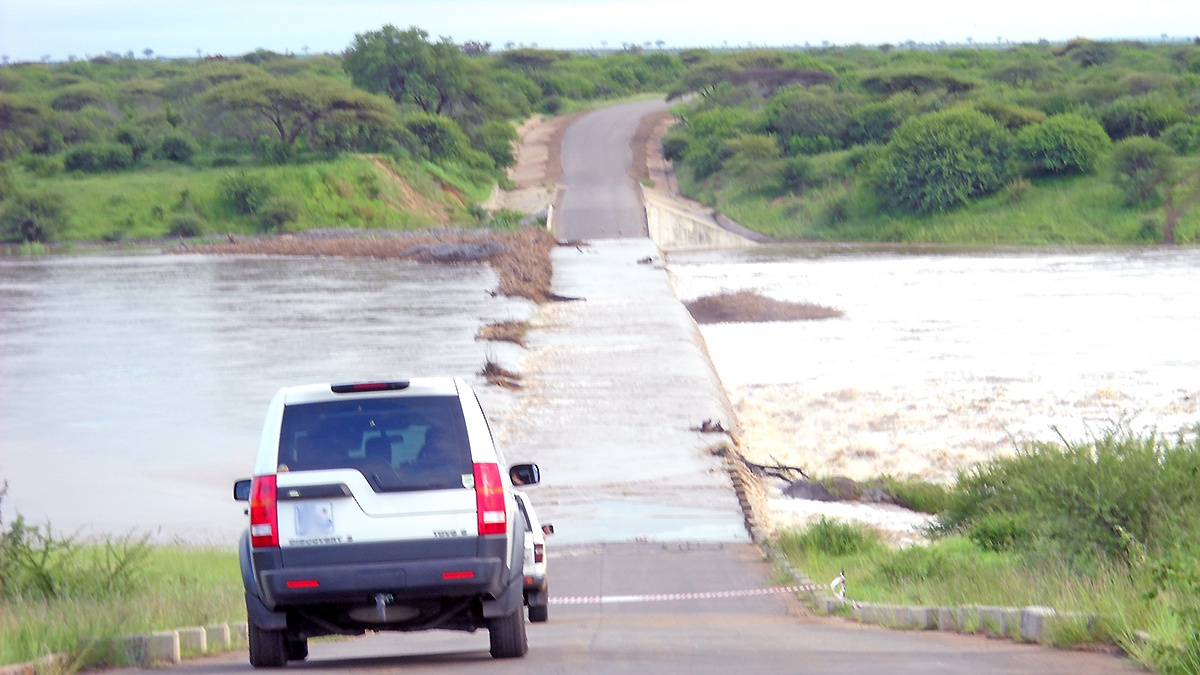
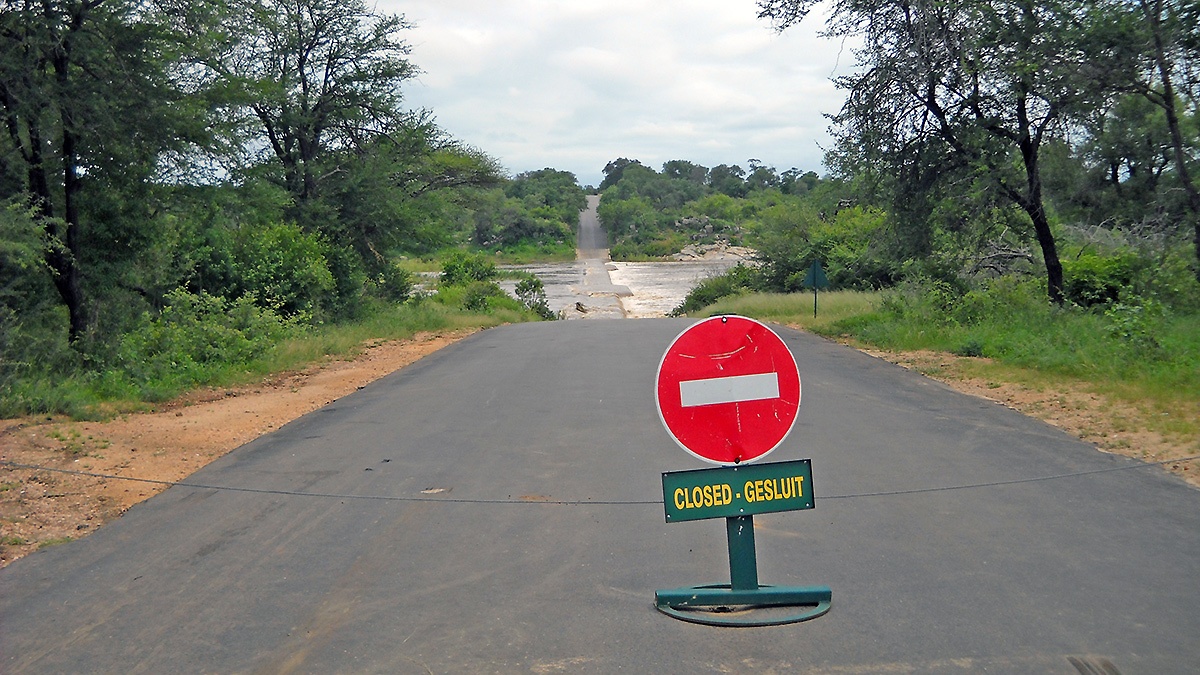
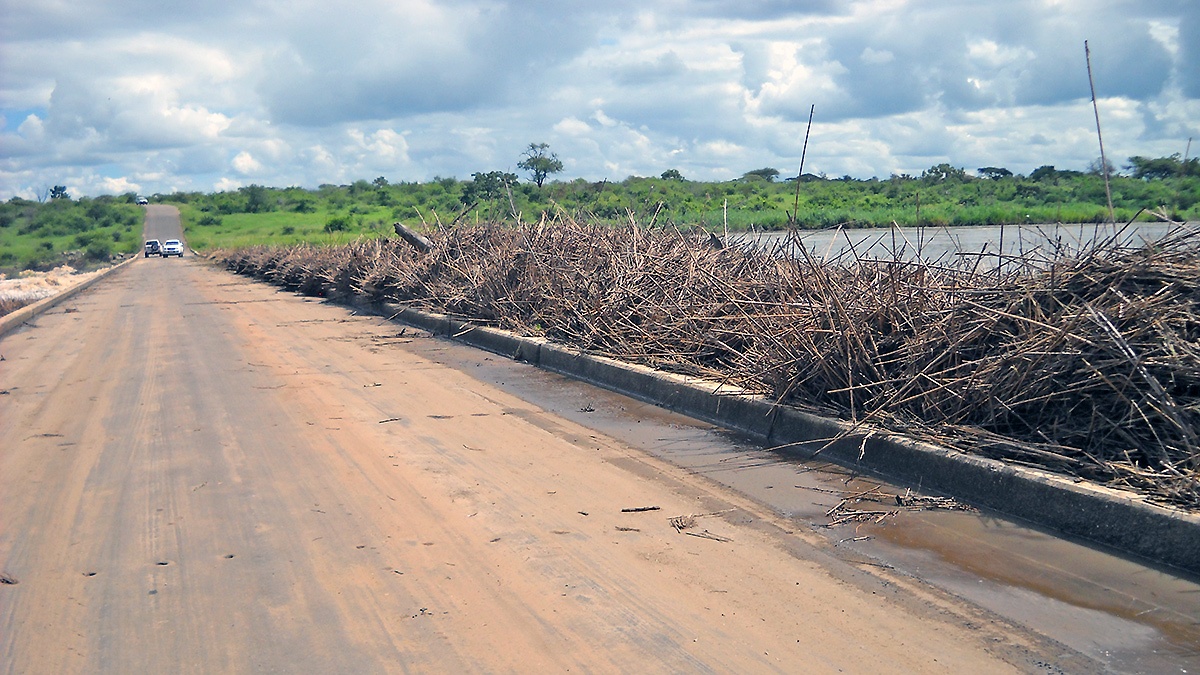
It was just as well we had headed north to Satara on Saturday, as arriving at Lower Sabie on Sunday morning with the gravel roads still closed, we found Lower Sabie causeway closed too. There had been heavy overnight rain, not in the Park, but up on the Escarpment where the Sabie River rises. The Sabie River causeway at Skukuza was also closed. We went as far as the bird hide at Lake Panic before retracing our steps back to Lower Sabie. Although the cloud was lighter than the previous day, with a few windows of blue sky appearing during the morning, conditions were still not conducive to much photography. However, by mid-afternoon when we got back to Lower Sabie the causeway there had been re-opened. Checking at the camp office we also found that most of the gravel roads had also been re-opened.
Lake Panic came up trumps with my first ever sighting of White-backed Night Heron, as well as Little Heron, Wire-tailed Swallow and African Jacana among others. Other birds seen and photographed during the day included Collared Sunbird, Greater Blue-eared Starling, Yellow-billed Stork, Jacobin Cuckoo, Burchell’s Coucal and Village Weaver.
![Collared Sunbird [Hedydipna collaris zuluensis]](https://neilswildlifejournal.uk/wp-content/gallery/post-images-2011/CN8E7514_EOS-1D_LowerSabie_16Jan2011.jpg "Collared Sunbird [Hedydipna collaris zuluensis]")
![Greater Blue-eared Starling [Lamprotornis chalybaeus nordmanni]](https://neilswildlifejournal.uk/wp-content/gallery/post-images-2011/IMG_3638_40D_KNP_16Jan2011.jpg "Greater Blue-eared Starling [Lamprotornis chalybaeus nordmanni]")
![Yellow-billed Stork [Mycteria ibis]](https://neilswildlifejournal.uk/wp-content/gallery/post-images-2011/IMG_3646_40D_KNP_16Jan2011.jpg "Yellow-billed Stork [Mycteria ibis]")
![Burchell's Coucal [Centropus burchellii burchellii]](https://neilswildlifejournal.uk/wp-content/gallery/musophagiformes-otidiformes-cuculiformes-pterocliformes/CN8E7623_EOS-1D_NhlowaRoad_16Jan2011.jpg "Burchell's Coucal [Centropus burchellii burchellii]")
![Jacobin Cuckoo [Clamator jacobinus serratus]](https://neilswildlifejournal.uk/wp-content/gallery/musophagiformes-otidiformes-cuculiformes-pterocliformes/CN8E7618_EOS-1D_LowerSabie_16Jan2011.jpg "Jacobin Cuckoo [Clamator jacobinus serratus]")
![White-backed Night Heron [Gorsachius leuconotus]](https://neilswildlifejournal.uk/wp-content/gallery/pelecaniformes-opisthocomiformes/CN8E7560_EOS-1D_LakePanic_16Jan2011.jpg "White-backed Night Heron [Gorsachius leuconotus]")
![Little Heron [Butorides atricapilla atricapilla]](https://neilswildlifejournal.uk/wp-content/gallery/pelecaniformes-opisthocomiformes/CN8E7569_EOS-1D_LakePanic_16Jan2011.jpg "Little Heron [Butorides atricapilla atricapilla]")
![Wire-tailed Swallow [Hirundo smithii smithii]](https://neilswildlifejournal.uk/wp-content/gallery/pycnonotidae-hirundinidae/CN8E7522_EOS-1D_SabieRiverBr_16Jan2011.jpg "Wire-tailed Swallow [Hirundo smithii smithii]")
![Village Weaver [Ploceus cucullatus spilonotus]](https://neilswildlifejournal.uk/wp-content/gallery/passeridae-ploceidae/IMG_3634_40D_SabieRiverLoop_16Jan2011.jpg "Village Weaver [Ploceus cucullatus spilonotus]")
![Wire-tailed Swallow [Hirundo smithii smithii]](https://neilswildlifejournal.uk/wp-content/gallery/pycnonotidae-hirundinidae/CN8E7543_EOS-1D_LakePanic_16Jan2011.jpg "Wire-tailed Swallow [Hirundo smithii smithii]")
![African Jacana [Actophilornis africanus]](https://neilswildlifejournal.uk/wp-content/gallery/charadriiformes-1/CN8E7586_EOS-1D_LakePanic_16Jan2011.jpg "African Jacana [Actophilornis africanus]")
The hot, humid weather seemed to have brought out a lot of butterflies, and I was able to get photos of African Yellow Pansy, African Orange Tip and African Common White, as well as some other non-avian subjects, Diurnal Copper Dung Beetle and Cape Black-backed Jackal.
![Black-backed Jackal [Canis mesomelas mesomelas]](https://neilswildlifejournal.uk/wp-content/gallery/carnivores/CN8E7646_EOS-1D_NhlowaRoad_16Jan2011.jpg "Black-backed Jackal [Canis mesomelas mesomelas]")
![African Common White [Belenois creona severina]](https://neilswildlifejournal.uk/wp-content/gallery/butterflies-hesperiidae-lycaenidae-pieridae-papilionidaebutterflies-hesperiidae-lycaenidae-pieridae-papilionidae/IMG_3629_40D_SabieRiverLoop_16Jan2011.jpg "African Common White [Belenois creona severina]")
![Common Orange Tip [Colotis evenina evenina]](https://neilswildlifejournal.uk/wp-content/gallery/butterflies-hesperiidae-lycaenidae-pieridae-papilionidaebutterflies-hesperiidae-lycaenidae-pieridae-papilionidae/CN8E7529_EOS-1D_LowerSabieRoad_16Jan2011.jpg "Common Orange Tip [Colotis evenina evenina]")
![Diurnal Copper Dung Beetle [Kheper nigroeaneus?]](https://neilswildlifejournal.uk/wp-content/gallery/beetles-weevils/IMG_3632_40D_SabieRiverLoop_16Jan2011.jpg "Diurnal Copper Dung Beetle [Kheper nigroeaneus?]")
![Yellow Pansy [Junonia hierta cebrene]](https://neilswildlifejournal.uk/wp-content/gallery/butterflies-nymphalidae/CN8E7525_EOS-1D_LowerSabieRoad_16Jan2011.jpg "Yellow Pansy [Junonia hierta cebrene]")
Normally we would leave Ngwenya and head straight home, but with our restricted access over the previous two days, we headed into the Park again yesterday morning, driving mainly on the re-opened gravel roads to Skukuza and from there exiting the Park at Phabeni Gate. We managed to add some species to the trip list, including African Green Pigeon, African Cuckoo, Common Scimitarbill and Red-collared Widowbird. However, best sighting of the morning, just short of Phabeni Gate was a bird often heard at this time of year, especially after rain (I don’t know why), yet from my experience difficult to photograph. This I rectified with my first photo of a Monotonous Lark, sitting atop a bush singing its appropriately monotonous song.
![Monotonous Lark [Mirafra passerina]](https://neilswildlifejournal.uk/wp-content/gallery/stenostiridae-paridae-remizidae-alaudidae/CN8E7659_EOS-1D_AlbasiniRoad_17Jan2011.jpg "Monotonous Lark [Mirafra passerina]")