
Santiago, 19 May 2012
I have just spent 4 nights in south-eastern Peru on a work-related trip but managed to start a Peru list with 32 species (incl. 18 lifers).
On 14th May I took an early morning flight with some colleagues, from Santiago to Arica in the far north of Chile. We were collected by taxi and driven across the border to Tacna in Peru, a large city of around 300,000 population. Here we transferred to one of our project vehicles driven down from our project base in Moquegua, a distance of 160 km. Normally we would go straight to Moquegua but my colleagues needed to take a longer route, heading to the coast at Ilo.
Taking lunch right on the seafront in Ilo gave me a good opportunity to do a bit of birding. In fact I didn’t even need to move from my table and was able to photograph Peruvian Pelican, Belcher’s Gull and Kelp Gull, as well as noting both Neotropic and Guanay Cormorants. I missed out on a photo of some Marine Otter (Lontra felina) in the harbour.
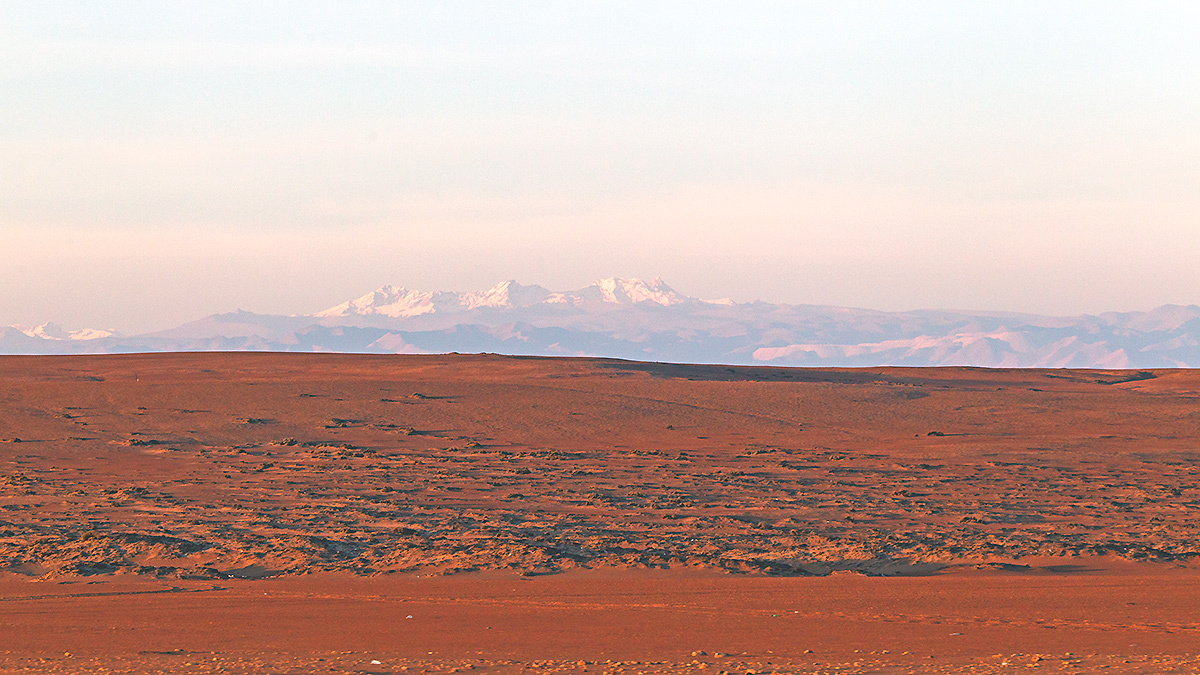
Concluding business there we headed back north and joined the Pan-American highway, which between Tacna and Moquegua runs through the Chala, the coastal desert of Peru, which is the northwards extension into Peru of the Atacama Desert. It is an area largely devoid of vegetation, a sea of red sand contrasting sharply with snow-clad peaks of the Andes on the horizon. The only birds seen here were a single American Kestrel and several Turkey Vulture.
![Peruvian Pelican [Pelecanus thagus]](https://neilswildlifejournal.uk/wp-content/gallery/pelecaniformes-opisthocomiformes/CN8E4776_EOS-1D_ilo_14May2012.jpg "Peruvian Pelican [Pelecanus thagus]")
![Belcher's Gull [Larus belcheri]](https://neilswildlifejournal.uk/wp-content/gallery/charadriiformes-2/CN8E4803_EOS-1D_ilo_14May2012.jpg "Belcher's Gull [Larus belcheri]")
![Belcher's Gull [Larus belcheri]](https://neilswildlifejournal.uk/wp-content/gallery/charadriiformes-2/CN8E4779_EOS-1D_ilo_14May2012.jpg "Belcher's Gull [Larus belcheri]")
![Kelp Gull [Larus dominicanus dominicanus]](https://neilswildlifejournal.uk/wp-content/gallery/post-images-2012/CN8E4802_EOS-1D_ilo_14May2012.jpg "Kelp Gull [Larus dominicanus dominicanus]")
We stayed for the 4 nights at a hotel in Moquegua, the regional capital, with a population of about 70,000. On a few walks around the grounds of the hotel I managed to photograph West Peruvian Dove, Vermilion Flycatcher, Groove-billed Ani and my first hummingbird, the Peruvian Sheartail. Also seen was the local sub-species of Rufous-collared Sparrow and others including Southern House Wren and Blue-and-white Swallow.
![West Peruvian Dove [Zenaida meloda]](https://neilswildlifejournal.uk/wp-content/gallery/columbiformes/CN8E5098_EOS-1D_Moquegua_16May2012.jpg "West Peruvian Dove [Zenaida meloda]")
![Vermilion Flycatcher [Pyrocephalus obscurus cocachacrae]](https://neilswildlifejournal.uk/wp-content/gallery/tyrannidae/CN8E4837_EOS-1D_Moquegua_15May2012.jpg "Vermilion Flycatcher [Pyrocephalus obscurus cocachacrae]")
![Groove-billed Ani [Crotophaga sulcirostris]](https://neilswildlifejournal.uk/wp-content/gallery/musophagiformes-otidiformes-cuculiformes-pterocliformes/CN8E5245_EOS-1D_Moquegua_17May2012.jpg "Groove-billed Ani [Crotophaga sulcirostris]")
![Peruvian Sheartail [Thaumastura cora]](https://neilswildlifejournal.uk/wp-content/gallery/post-images-2012/CN8E5106_EOS-1D_Moquegua_120516.jpg "Peruvian Sheartail [Thaumastura cora]")
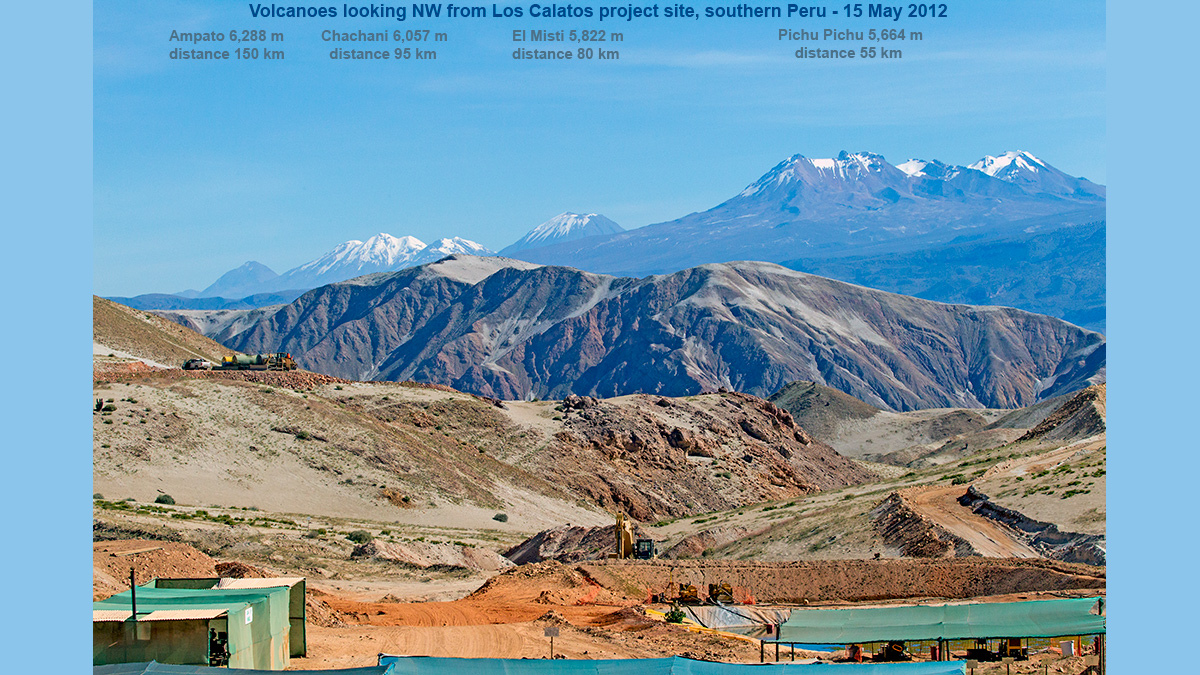
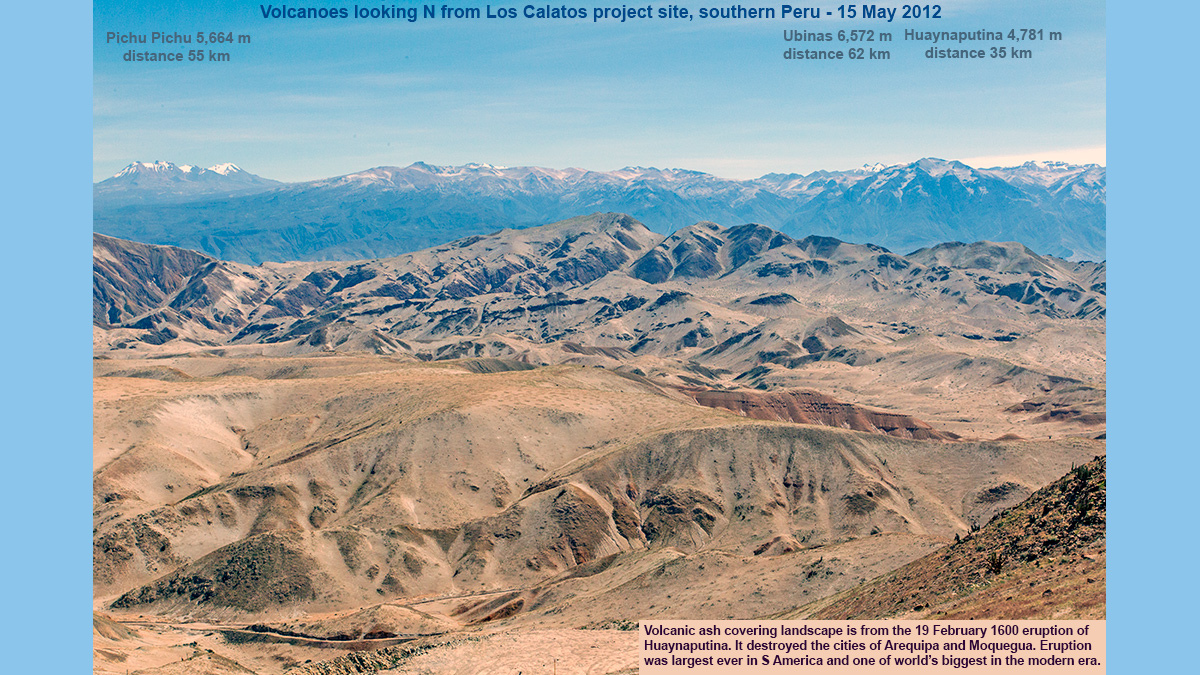
As for the work part of the trip, this took me to the Los Calatos project site at an elevation of 3,000 m in the mountains north of Moquegua. I stood at this height just over 2 months ago at the top of the Mafika Lisiu Pass in Lesotho. There you are ‘at the top’, on a flat deeply dissected plateau. Here in the Andes there always seems to be something higher. The view from Los Calatos is truly spectacular, with at least 6 volcanoes, some dormant, a couple still active. Much of what looks like greyish snow draping the slopes of the mountains is actually a deep layer of volcanic ash, spewed out during the eruption of Huaynaputina in the year 1600. This was the largest ever eruption in South America and one of the world’s biggest in the modern era. The cities of Moquegua and Arequipa, now Peru’s second most populous city (about 1,200,000), were both destroyed during the eruption.
It was quite an intensive work schedule so there was little time for much more than having the camera handy during coffee and lunch breaks, seeing what I could around the camp periphery, which was not much. Those birds that I managed to photograph were Spot-billed Ground-Tyrant, Ash-fronted Sierra-Finch, Black-winged Ground-Dove and Variable Hawk. Those I was able to identify but unable to photograph were Greenish Yellow-Finch and Golden-spotted Ground-Dove.
Over the 3 days of driving between Moquegua and Los Calatos, I spotted Aplomado Falcon, Turkey Vulture, Mountain Caracara, Andean Ibis and Blue-and-white Swallow.
![Spot-billed Ground Tyrant [Muscisaxicola maculirostris maculirostris]](https://neilswildlifejournal.uk/wp-content/gallery/tyrannidae/CN8E4969_EOS-1D_LosCalatos_15May2012.jpg "Spot-billed Ground Tyrant [Muscisaxicola maculirostris maculirostris]")
![Ash-breasted Sierra Finch [Geospizopsis plebejus plebejus]](https://neilswildlifejournal.uk/wp-content/gallery/thraupidae/CN8E5023_EOS-1D_LosCalatos_15May2012.jpg "Ash-breasted Sierra Finch [Geospizopsis plebejus plebejus]")
![Black-winged Ground Dove [Metriopelias melanoptera melanoptera]](https://neilswildlifejournal.uk/wp-content/gallery/columbiformes/CN8E5012_EOS-1D_LosCalatos_15May2012.jpg "Black-winged Ground Dove [Metriopelias melanoptera melanoptera]")
![Variable Hawk [Geranoaetus polyosoma polyosoma]](https://neilswildlifejournal.uk/wp-content/gallery/accipitriformes/CN8E5051_EOS-1D_LosCalatos_15May2012.jpg "Variable Hawk [Geranoaetus polyosoma polyosoma]")