
Atlasville, 30 Sep 2010
When I decided to take a birding trip to Kenya, from which I have just returned, I wanted to maximise the number of species seen, while hopefully having a high ratio of lifers in the final list. The trip was planned and all accommodation and transport bookings made by Moses Kandie (who now has his own company Birdwatching Kenya), whom I found and contacted via the BirdingPal website. Moses would be my one-on-one bird guide for 7 full days of birding.
The trip he put together had as the primary birding locations Lake Nakuru National Park, Lake Baringo and the Kakamega Forest. En route between these locations we were able to bird the Eldoret-Kerio-Tambach-Kabarnet area, the road from Naivasha to the Kinangop Plateau, home of the endangered Sharpe’s Longclaw, the Limuru Ponds north-west of Nairobi and take in a boat trip on Lake Victoria at Kisumu. The vehicle used was a 4WD Toyota “Kombi” with a safari roof allowing you to stand up fully and have an uninterrupted 360° view.
My final trip list was 354 species with 134 lifers (a very good 3 lifers in every 8 species seen). Bird highlight of the trip was undoubtedly the endangered endemic, Sharpe’s Longclaw, flushed from long grass after 10 minutes of circling around in a field in which Moses usually has success in finding this elusive species. Moses also has a great network of locals who keep him updated on the whereabouts of some of the sought-after species. Without their help I probably would not have seen some other lifers like Slender-tailed Nightjar, Greyish Eagle-Owl and Three-banded Courser. Without Moses’s intimate knowledge of his home area, Baringo, I would have missed species like Black-headed Lapwing, Senegal Thick-Knee, Hemprich’s Hornbill and Brown-tailed Rock-Chat, all of which were found off the beaten track and would not have been seen by anyone trying to bird the area without an experienced guide.
Venue highlight was definitely Kakamega Forest, where almost every bird that appeared was a lifer – Brown-chested Alethe, Blue-headed Bee-Eater, Red-headed Bluebill, Brown-throated Wattle-Eye, Double-toothed Barbet – to name but a few. It was here that our specialist Kakamega guide called up a Scaly-breasted Illadopsis, so close that when it finally appeared in a gap in the dense undergrowth it was inside the minimum focussing distance of my 300mm lens!
My images, unfortunately for me, were lost as a result of the hard drive crash mentioned in the last post. So, any images I post are low resolution images downloaded from some birding websites that I had uploaded them to, or from e-mail attachments.
I arrived in Nairobi on 20 September and was met at the airport by Moses and our driver.
Day 1: 21 September
After spending the night at the Gracia Gardens Hotel in western Nairobi, selected to avoid the city’s notorious early morning traffic logjams as we headed north-west on the first leg of the trip, I got in some birding on a brief pre-breakfast walk in the hotel grounds. A Bronze Sunbird got my list off to a good start.
First stop of the day was at the Limuru Ponds, a 35km drive on the main road to Nakuru. It boasted an impressive list of 33 species, but most were all too familiar to me from southern Africa. The exceptions were another sunbird, Northern Double-collared Sunbird, Winding Cisticola and probably the commonest weaver in this part of Kenya, Baglafecht Weaver.
50km further on, approaching Naivasha, we took a 15km drive due east onto the Kinangop plateau, where the target bird was Sharpe’s Longclaw, an endangered, range-restricted, Kenya endemic. My list of lifers grew as we stopped regularly along this road – Anteater Chat, Speke’s Weaver, Northern Yellow White-eye, Hunter’s Cisticola, Kenya Sparrow, Purple Grenadier, Golden-winged Sunbird, Cinnamon-chested Bee-eater. Then, after 15 minutes of searching the long grass in a field usually reliable for the endemic I finally got my photo of a Sharpe’s Longclaw. Retracing our steps to the main road I added Augur Buzzard, and yet more lifers – Dusky Turtle Dove, Rüppell’s Robin-Chat and Abyssinian Wheatear.
Rejoining the main road, we passed through Naivasha, heading to Nakuru for our overnight stop.
![Sharpe's Longclaw [Macronyx sharpei]](https://neilswildlifejournal.uk/wp-content/gallery/motacillidae-fringillidae-emberizidae-passerellidae/IMG_0030_EOS-1D_Kinangop_21Sep2010.jpg "Sharpe's Longclaw [Macronyx sharpei]")
![Purple Grenadier [Granatina ianthinogaster]](https://neilswildlifejournal.uk/wp-content/gallery/post-images-2009-2010/IMG_0033_EOS-1D_nrNaivasha_21Sep2010.jpg "Purple Grenadier [Granatina ianthinogaster]")
![Purple Grenadier [Granatina ianthinogaster]](https://neilswildlifejournal.uk/wp-content/gallery/post-images-2009-2010/IMG_0034_EOS-1D_nrNaivasha_21Sep2010.jpg "Purple Grenadier [Granatina ianthinogaster]")
![Baglafecht Weaver [Ploceus baglafecht reichenowi]](https://neilswildlifejournal.uk/wp-content/gallery/post-images-2009-2010/IMG_0036_EOS-1D_Limuru_21Sep2010.jpg "Baglafecht Weaver [Ploceus baglafecht reichenowi]")
![Baglafecht Weaver [Ploceus baglafecht reichenowi]](https://neilswildlifejournal.uk/wp-content/gallery/post-images-2009-2010/IMG_0037_EOS-1D_Limuru_21Sep2010.jpg "Baglafecht Weaver [Ploceus baglafecht reichenowi]")
![Augur Buzzard [Buteo augur augur]](https://neilswildlifejournal.uk/wp-content/gallery/post-images-2009-2010/IMG_0038_EOS-1D_nrNaivasha_21Sep2010.jpg "Augur Buzzard [Buteo augur augur]")
![Golden-winged Sunbird [Drepanorhynchus reichenowi reichenowi]](https://neilswildlifejournal.uk/wp-content/gallery/post-images-2009-2010/IMG_0054_EOS-1D_Kinangop_21Sep2010.jpg "Golden-winged Sunbird [Drepanorhynchus reichenowi reichenowi]")
![Hunter's Cisticola [Cisticola hunteri]](https://neilswildlifejournal.uk/wp-content/gallery/post-images-2009-2010/IMG_0055_EOS-1D_Kinangop_21Sep2010.jpg "Hunter's Cisticola [Cisticola hunteri]")
![Kenya Sparrow [Passer rufocinctus]](https://neilswildlifejournal.uk/wp-content/gallery/post-images-2009-2010/IMG_0056_EOS-1D_Kinangop_21Sep2010.jpg "Kenya Sparrow [Passer rufocinctus]")
![Dusky Turtle Dove [Streptopelia lugens]](https://neilswildlifejournal.uk/wp-content/gallery/post-images-2009-2010/IMG_0057_EOS-1D_Kinangop_21Sep2010.jpg "Dusky Turtle Dove [Streptopelia lugens]")
![Abyssinian Wheatear [Oenanthe lugubris schalowi]](https://neilswildlifejournal.uk/wp-content/gallery/turdidae-muscicapidae-cinclidae-chloropseidae-dicaeidae/IMG_0015_EOS-1D_nrNaivasha_21Sep2010.jpg "Abyssinian Wheatear [Oenanthe lugubris schalowi]")
Day 2: 22 September
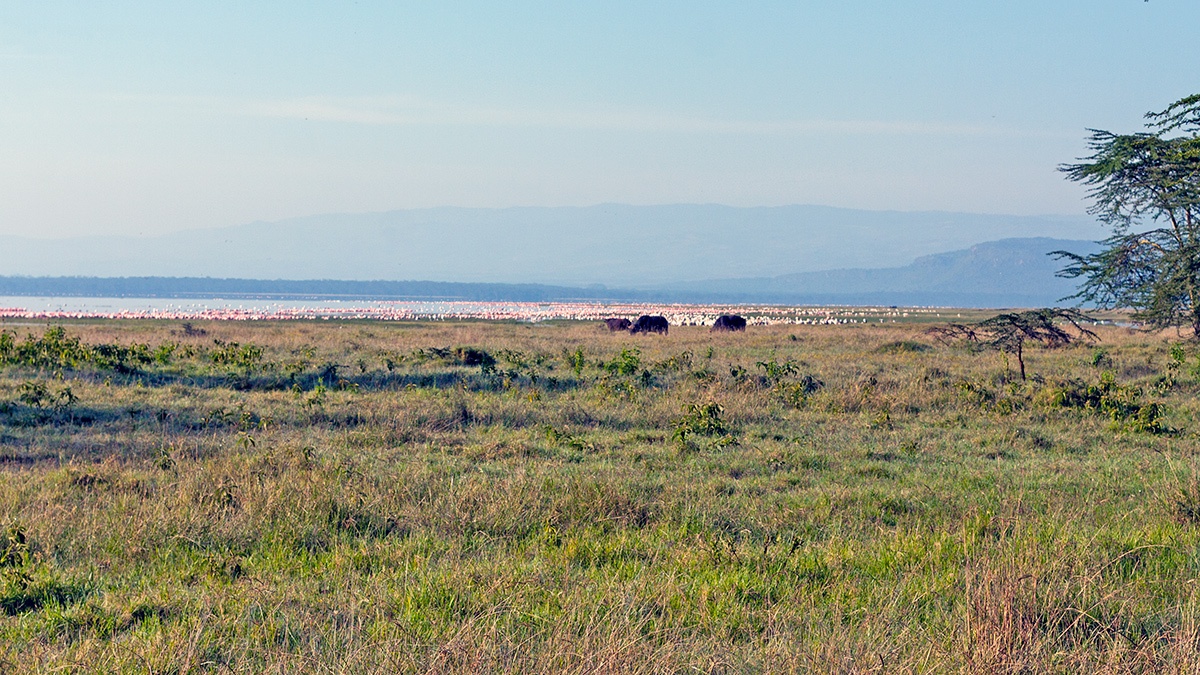
Main focus of today’s birding was a morning in Lake Nakuru National Park, centred around the famed ‘Pink Lake’, Lake Nakuru, so-named because of the large numbers of flamingoes that congregate here. I first saw Lake Nakuru in October 1975 during a 3,000-mile road trip to the Rift Valley and back, from the Zambian Copperbelt.
While I waited with the driver just outside the entrance gate while our park entrance fees were paid, I was able to add Superb Starling, photographed in 1975 when I wasn’t that interested in birding, and more lifers – Rüppell’s Starling, White-bellied Tit and Red-cheeked Cordon-bleu. The morning’s tally of species was an impressive 121 species, including many familiar to me, such as Red-billed Firefinch (but the local sub-species), Bleating Camaroptera, Black-crowned Tchagra, African Fish Eagle, Long-crested Eagle, Lanner Falcon, Wire-tailed Swallow, Brubru, Chinspot Batis, Yellow-throated Longclaw, Black Saw-wing and of course both Lesser and Greater Flamingo. There were those seen the previous day that I now managed to photograph, like Anteater Chat. The lifer list grew with African Grey Woodpecker, Spur-winged Lapwing, Little Rock Thrush, Fischer’s Lovebird, Isabelline Wheatear, Tiny Cisticola, Reichenow’s Seedeater and Angola Swallow.
The only ‘blip’ of the trip happened during the afternoon when a mechanical issue with the vehicle forced a stop of several hours in the small town of Eldama Ravine to have repairs done. This took away birding time and caused an after dark arrival at our next overnight stop at the Naiberi Resort just outside Eldoret. Somewhere between Nakuru and Eldama Ravine we had crossed the Equator.
![Red-billed Firefinch [Lagonosticta senegala ruberrima]](https://neilswildlifejournal.uk/wp-content/gallery/estrildidae-viduidae-prunellidae/IMG_0029_EOS-1D_Nakuru_22Sep2010.jpg "Red-billed Firefinch [Lagonosticta senegala ruberrima]")
![Red-cheeked Cordon-bleu [Uraeginthus bengalus ugogensis]](https://neilswildlifejournal.uk/wp-content/gallery/post-images-2009-2010/IMG_0035_EOS-1D_NakuruNP_22Sep2010.jpg "Red-cheeked Cordon-bleu [Uraeginthus bengalus ugogensis]")
![Anteater Chat [Myrmecocichla aethiops cryptoleuca]](https://neilswildlifejournal.uk/wp-content/gallery/post-images-2009-2010/IMG_0040_EOS-1D_NakuruNP_22Sep2010.jpg "Anteater Chat [Myrmecocichla aethiops cryptoleuca]")
![African Grey Woodpecker [Dendropicos goertae centralis]](https://neilswildlifejournal.uk/wp-content/gallery/post-images-2009-2010/IMG_0041_EOS-1D_NakuruNP_22Sep2010.jpg "African Grey Woodpecker [Dendropicos goertae centralis]")
![Rüppell's Starling [Lamprotornis purpuroptera purpuroptera]](https://neilswildlifejournal.uk/wp-content/gallery/post-images-2009-2010/IMG_0058_EOS-1D_Nakuru_22Sep2010.jpg "Rüppell's Starling [Lamprotornis purpuroptera purpuroptera]")
![Superb Starling [Lamprotornis superbus]](https://neilswildlifejournal.uk/wp-content/gallery/post-images-2009-2010/IMG_0059_EOS-1D_Nakuru_22Sep2010.jpg "Superb Starling [Lamprotornis superbus]")
![White-bellied Tit [Melaniparus albiventris]](https://neilswildlifejournal.uk/wp-content/gallery/post-images-2009-2010/IMG_0060_EOS-1D_Nakuru_22Sep2010.jpg "White-bellied Tit [Melaniparus albiventris]")
![Spur-winged Lapwing [Vanellus spinosus]](https://neilswildlifejournal.uk/wp-content/gallery/post-images-2009-2010/IMG_0061_EOS-1D_Nakuru_22Sep2010.jpg "Spur-winged Lapwing [Vanellus spinosus]")
![Little Rock Thrush [Monticola rufocinereus rufocinereus]](https://neilswildlifejournal.uk/wp-content/gallery/turdidae-muscicapidae-cinclidae-chloropseidae-dicaeidae/IMG_0013_EOS-1D_Nakuru_22Sep2010.jpg "Little Rock Thrush [Monticola rufocinereus rufocinereus]")
Day 3: 23 September
Pre- and post-breakfast birding in the grounds of the resort turned up 38 species, including 7 more lifers – Yellow-bellied Waxbill, Western Citril, Tacazze Sunbird, Thick-billed Seedeater, Cinnamon Bracken Warbler, Hartlaub’s Turaco and Abyssinian Thrush. There was also another species that I had photographed on that trip 35 years previously, this one on the slopes of Mount Kilimanjaro, Streaky Seedeater.
Next stop was the Eldoret sewage ponds, where I added African Yellow Warbler, Common Sandpiper, Wood Sandpiper and an unlikely lifer with Green Sandpiper. Then a nearby fish farm added Holub’s Golden Weaver.
Our next destination was the Rondo Retreat close to the entrance to the Kakamega Forest. This was a 2-hour (75 km) drive, but much longer when you are stopping every now and then to do a spot of birding. The last 10km or so, on a gravel road, proved especially rewarding. The lifers just kept on coming – Red-headed Malimbe, Red-headed Bluebill, Grey-throated Barbet, Uganda Woodland Warbler, Stuhlmann’s Starling, Lühder’s Bushshrike, White-chinned Prinia, Yellow-whiskered Greenbul and Chubb’s Cisticola.
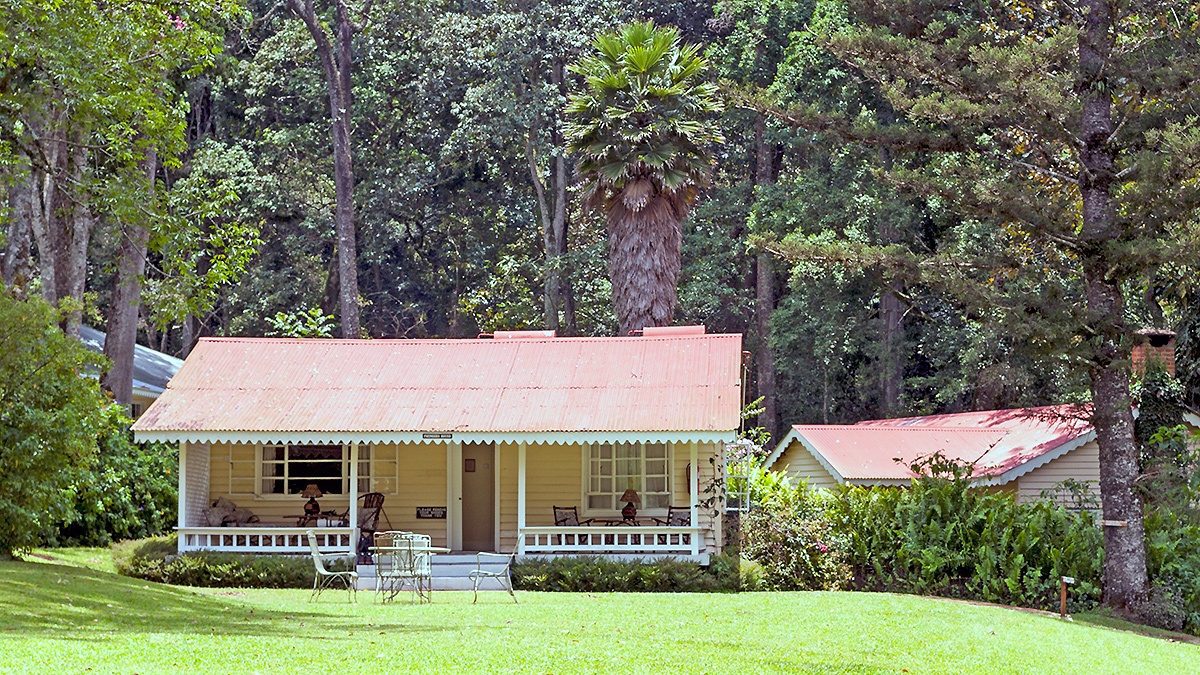
Rondo Retreat Centre, billed as ‘A Christian Retreat for Nature Lovers’, is set in beautiful grounds right on the edge of the Kakamega Rainforest. We arrived with enough time to settle into our delightful ‘zinc-roofed’, white-painted, wooden cottages and still do some pre-supper birding in the grounds adding two more lifers – White-headed Saw-wing and African Blue Flycatcher.
![Yellow-bellied Waxbill [Coccopygia quartinia kilimensis]](https://neilswildlifejournal.uk/wp-content/gallery/estrildidae-viduidae-prunellidae/IMG_0028_EOS-1D_Eldoret_23Sep2010.jpg "Yellow-bellied Waxbill [Coccopygia quartinia kilimensis]")
![Western Citril [Crithagra frontalis]](https://neilswildlifejournal.uk/wp-content/gallery/motacillidae-fringillidae-emberizidae-passerellidae/IMG_0032_EOS-1D_Eldoret_23Sep2010.jpg "Western Citril [Crithagra frontalis]")
![Tacazze Sunbird [Nectarinia tacazze jacksoni]](https://neilswildlifejournal.uk/wp-content/gallery/post-images-2009-2010/IMG_0044_EOS-1D_Naiberi_23Sep2010.jpg "Tacazze Sunbird [Nectarinia tacazze jacksoni]")
![Hartlaub's Turaco [Tauraco hartlaubi]](https://neilswildlifejournal.uk/wp-content/gallery/post-images-2009-2010/IMG_0063_EOS-1D_Eldoret_23Sep2010.jpg "Hartlaub's Turaco [Tauraco hartlaubi]")
![Streaky Seedeater [Serinus striolatus striolatus]](https://neilswildlifejournal.uk/wp-content/gallery/post-images-2009-2010/IMG_0064_EOS-1D_Eldoret_23Sep2010.jpg "Streaky Seedeater [Serinus striolatus striolatus]")
![Green Sandpiper [Tringa ochropus]](https://neilswildlifejournal.uk/wp-content/gallery/post-images-2009-2010/IMG_0065_EOS-1D_Eldoret_23Sep2010.jpg "Green Sandpiper [Tringa ochropus]")
![Grey-throated Barbet [Gymnobucco bonapartei cinereiceps]](https://neilswildlifejournal.uk/wp-content/gallery/post-images-2009-2010/IMG_0066_EOS-1D_Kakamega_23Sep2010.jpg "Grey-throated Barbet [Gymnobucco bonapartei cinereiceps]")
![White-headed Saw-wing [Psalidoprocne albiceps albiceps ]](https://neilswildlifejournal.uk/wp-content/gallery/post-images-2009-2010/IMG_0067_EOS-1D_Kakamega_23Sep2010.jpg "White-headed Saw-wing [Psalidoprocne albiceps albiceps ]")
Day 4: 24 September
This entire day was dedicated to birding on foot the roads in the vicinity of Rondo Retreat, some of the Rondo trails in the forest adjacent to the retreat, walking to the Kakamega Forest Station and some of the trails close to it.
Moses had arranged a local Kakamega specialist guide and the day got off to a great start in the garden of the retreat with one of those birds I hoped I would see on this trip, the Great Blue Turaco. Sadly, it was a spotting-scope view, so there was no photograph.
Total species for the day was 67, with a high ratio of lifers. There were some that had seen yesterday, but only photographed today, African Thrush, White-chinned Prinia, Yellow-whiskered Greenbul and Chubb’s Cisticola, as well as one that I had seen in a hotel garden at the base of Kilimanjaro back in 1975, White-eyed Slaty Flycatcher.
The list of lifers was swelled by the likes of Northern Black Flycatcher, Green-headed Sunbird, Snowy-crowned Robin-Chat, Vieillot’s Black Weaver, Black-necked Weaver, Olive Sunbird, Black-and-white Mannikin, Mackinnon’s Shrike, Blue-headed Bee-eater, Petit’s Cuckooshrike, Eastern Yellow-billed Barbet, Kakamega Greenbul, Joyful Greenbul, Grey-headed Nigrita, Equatorial Akalat, African Shrike-flycatcher, Brown-chested Alethe, Sharpe’s Drongo, Yellow-spotted Barbet, Pink-footed Puffback, Grey-winged Robin-Chat, Banded Prinia and last but not least, that Scaly-breasted Illadopsis that came into view so close that it was inside the minimum focus distance for my 300mm lens.
![Olive Sunbird [Cyanomitra olivacea ragazzii]](https://neilswildlifejournal.uk/wp-content/gallery/nectariniidae/IMG_0019_EOS-1D_Kakamega_24Sep2010.jpg "Olive Sunbird [Cyanomitra olivacea ragazzii]")
![Yellow-whiskered Greenbul [Eurillas latirostris latirostris]](https://neilswildlifejournal.uk/wp-content/gallery/pycnonotidae-hirundinidae/IMG_0003_EOS-1D_Kakamega_24Sep2010.jpg "Yellow-whiskered Greenbul [Eurillas latirostris latirostris]")
![Black-and-white Mannikin [Spermestes bicolor poensis]](https://neilswildlifejournal.uk/wp-content/gallery/estrildidae-viduidae-prunellidae/IMG_0027_EOS-1D_Kakamega_24Sep2010.jpg "Black-and-white Mannikin [Spermestes bicolor poensis]")
![African Thrush [Turdus pelios centralis]](https://neilswildlifejournal.uk/wp-content/gallery/turdidae-muscicapidae-cinclidae-chloropseidae-dicaeidae/IMG_0010_EOS-1D_Kakamega_24Sep2010.jpg "African Thrush [Turdus pelios centralis]")
![Chubb's Cisticola [Cisticola chubbi chubbi]](https://neilswildlifejournal.uk/wp-content/gallery/macrosphenidae-cettidae-aegithalidae-phylloscopidae-acrocephalidae-locustellidae-donacobiidae-cisticolidae/IMG_0008_EOS-1D_Kakamega_24Sep2010.jpg "Chubb's Cisticola [Cisticola chubbi chubbi]")
![White-chinned Prinia [Schistolais leucopogon reichenowi]](https://neilswildlifejournal.uk/wp-content/gallery/macrosphenidae-cettidae-aegithalidae-phylloscopidae-acrocephalidae-locustellidae-donacobiidae-cisticolidae/IMG_0009_EOS-1D_Kakamega_24Sep2010.jpg "White-chinned Prinia [Schistolais leucopogon reichenowi]")
![White-eyed Slaty Flycatcher [Melaenornis fischeri fischeri]](https://neilswildlifejournal.uk/wp-content/gallery/post-images-2009-2010/IMG_0042_EOS-1D_Kakamega_24Sep2010.jpg "White-eyed Slaty Flycatcher [Melaenornis fischeri fischeri]")
![Northern Black Flycatcher [Melaenornis edolioides lugubris]](https://neilswildlifejournal.uk/wp-content/gallery/post-images-2009-2010/IMG_0068_EOS-1D_Kakamega_24Sep2010.jpg "Northern Black Flycatcher [Melaenornis edolioides lugubris]")
![Mackinnon's Shrike [Lanius mackinnoni]](https://neilswildlifejournal.uk/wp-content/gallery/post-images-2009-2010/IMG_0069_EOS-1D_Kakamega_24Sep2010.jpg "Mackinnon's Shrike [Lanius mackinnoni]")
![Brown-chested Alethe [Pseudalethe poliocephala carruthersi]](https://neilswildlifejournal.uk/wp-content/gallery/post-images-2009-2010/IMG_0070_EOS-1D_Kakamega_24Sep2010.jpg "Brown-chested Alethe [Pseudalethe poliocephala carruthersi]")
![Snowy-crowned Robin-Chat [Cossypha niveicapilla melanonota]](https://neilswildlifejournal.uk/wp-content/gallery/turdidae-muscicapidae-cinclidae-chloropseidae-dicaeidae/IMG_0011_EOS-1D_Kakamega_24Sep2010.jpg "Snowy-crowned Robin-Chat [Cossypha niveicapilla melanonota]")
Day 5: 25 September
Leaving Rondo Retreat after breakfast we headed for Lake Victoria at Kisumu, third biggest city in Kenya after Nairobi and Mombasa, where we did some birding along the lakeshore, both on foot and from a boat.
Lifers added here included Gull-billed Tern, Eastern Plantain-eater, Black-headed Gonolek, Swamp Flycatcher, Carruthers’s Cisticola, Golden-backed Weaver, Northern Brown-throated Weaver and Slender-billed Weaver.
Two hours well spent, but we had to get back on the road as it was a long 3½-hour (150km) drive to our next overnight stop at a hotel in Iten, north-east of Eldoret. With a few birding stops this would be well over 4 hours. As it turned out there was only one stop en route, at the Chebonet Dam, where I added Grey Crowned Crane to the trip list, as well as the very familiar to me from South Africa, Red-knobbed Coot, Common Moorhen, Little Grebe and Black Crake.
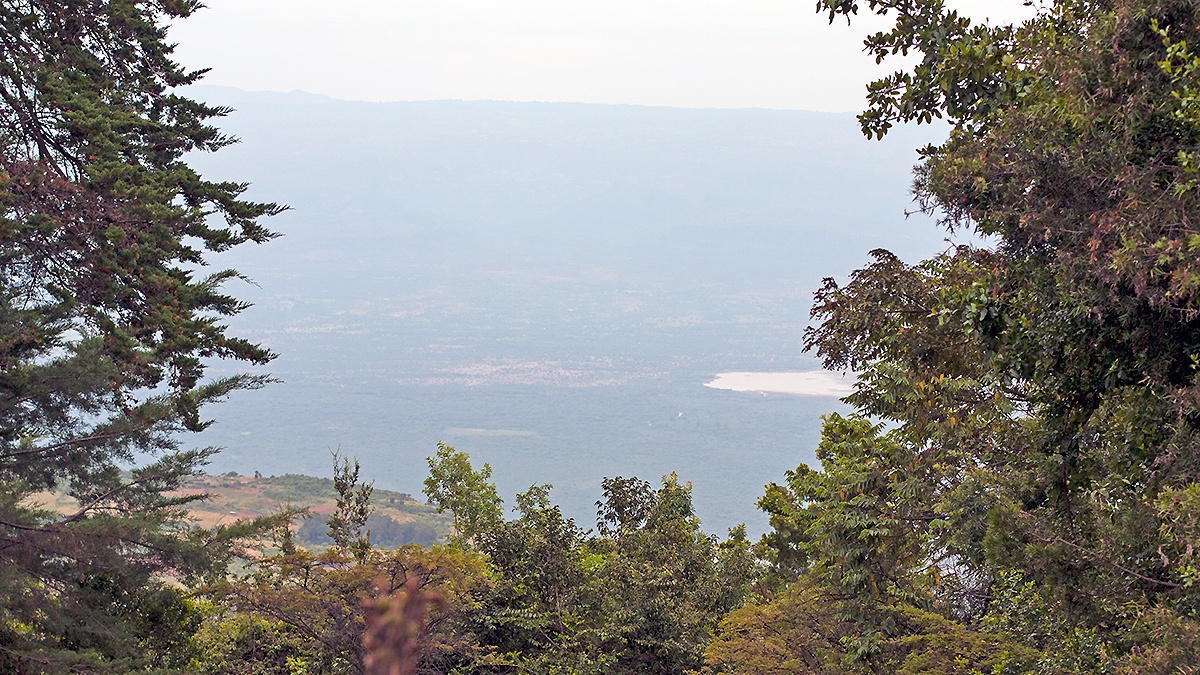
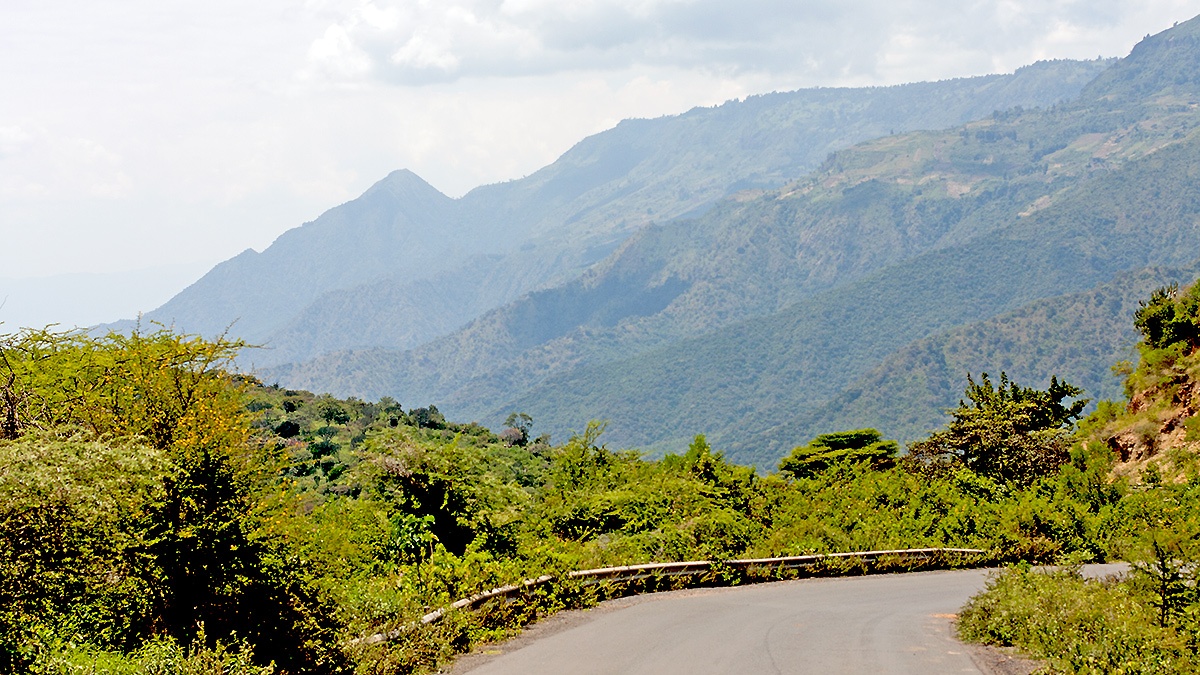
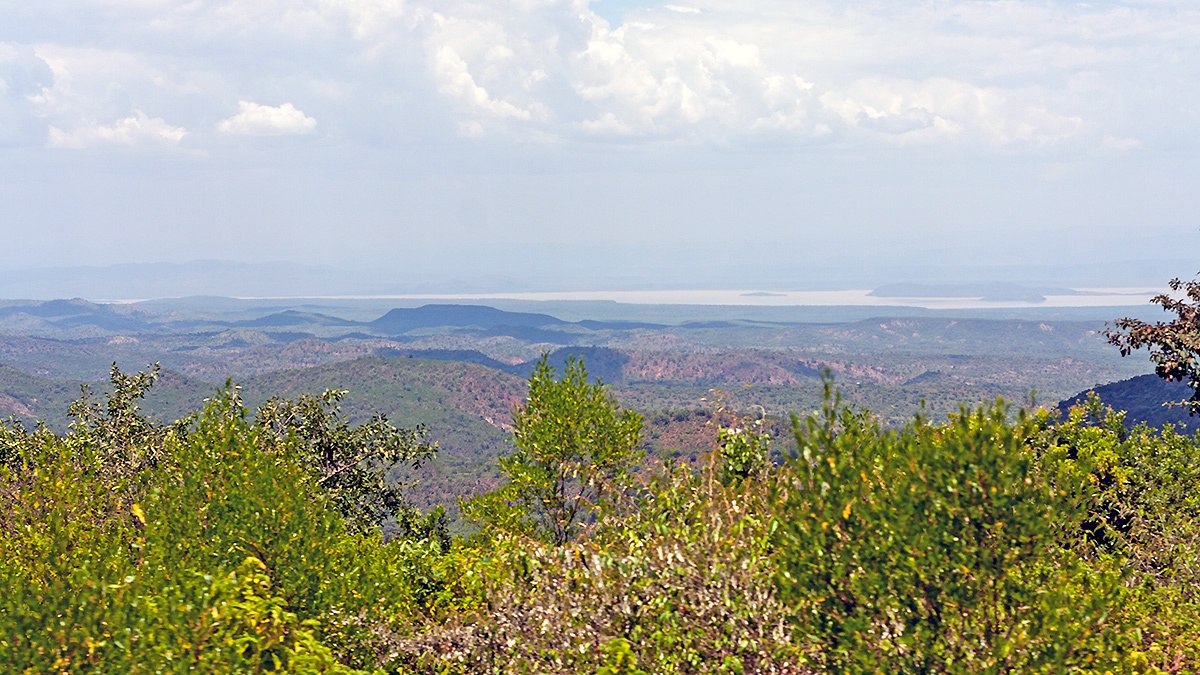
Our overnight stop was the Kerio View Hotel at an altitude of just over 2,300m perched on the edge of the Elgeyo Escarpment (the western wall of the Great Rift Valley) with a commanding view (when there is no heat haze!) of the Kerio Valley lying some 1,300m lower. Given the high altitude, there is a training camp for high performance athletes nearby.
I was able to wander around the gardens here for an hour and added a few more to the trip list, including Tropical Boubou, Speckled Pigeon and Red-eyed Dove.
![Gull-billed Tern [Gelochelidon nilotica nilotica]](https://neilswildlifejournal.uk/wp-content/gallery/post-images-2009-2010/IMG_0043_EOS-1D_Kisumu_25Sep2010.jpg "Gull-billed Tern [Gelochelidon nilotica nilotica]")
![Swamp Flycatcher [Muscicapa aquatica infulata]](https://neilswildlifejournal.uk/wp-content/gallery/post-images-2009-2010/IMG_0071_EOS-1D_Kisumu_25Sep2010.jpg "Swamp Flycatcher [Muscicapa aquatica infulata]")
Day 6: 26 September
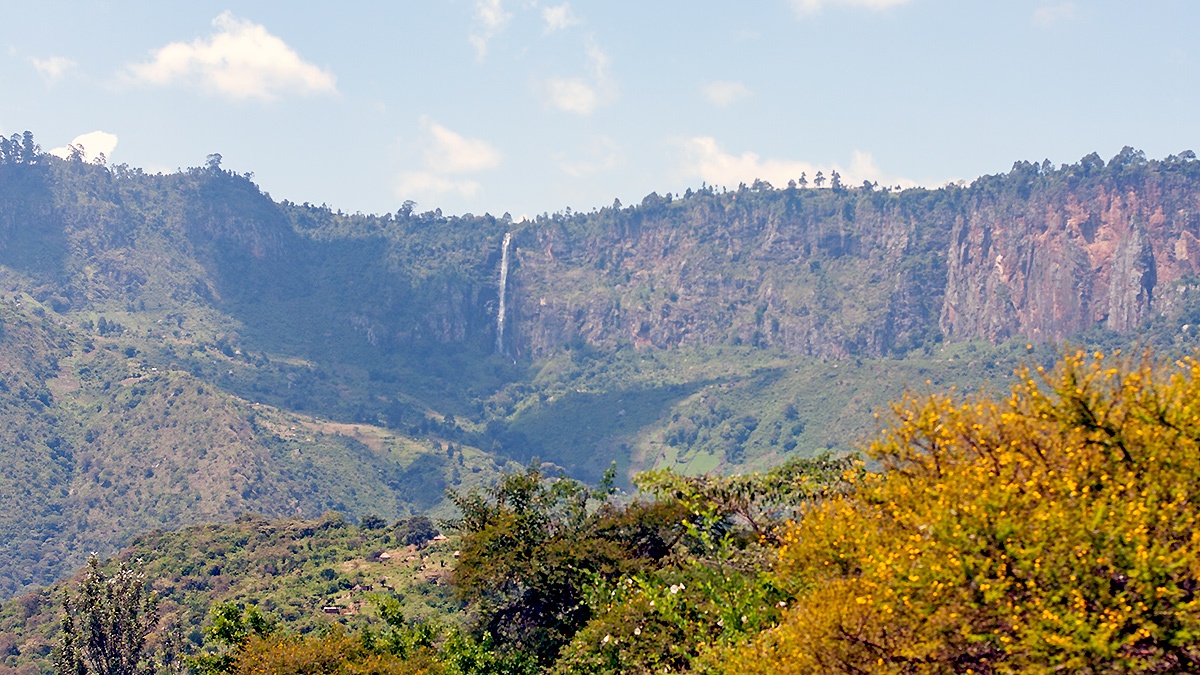
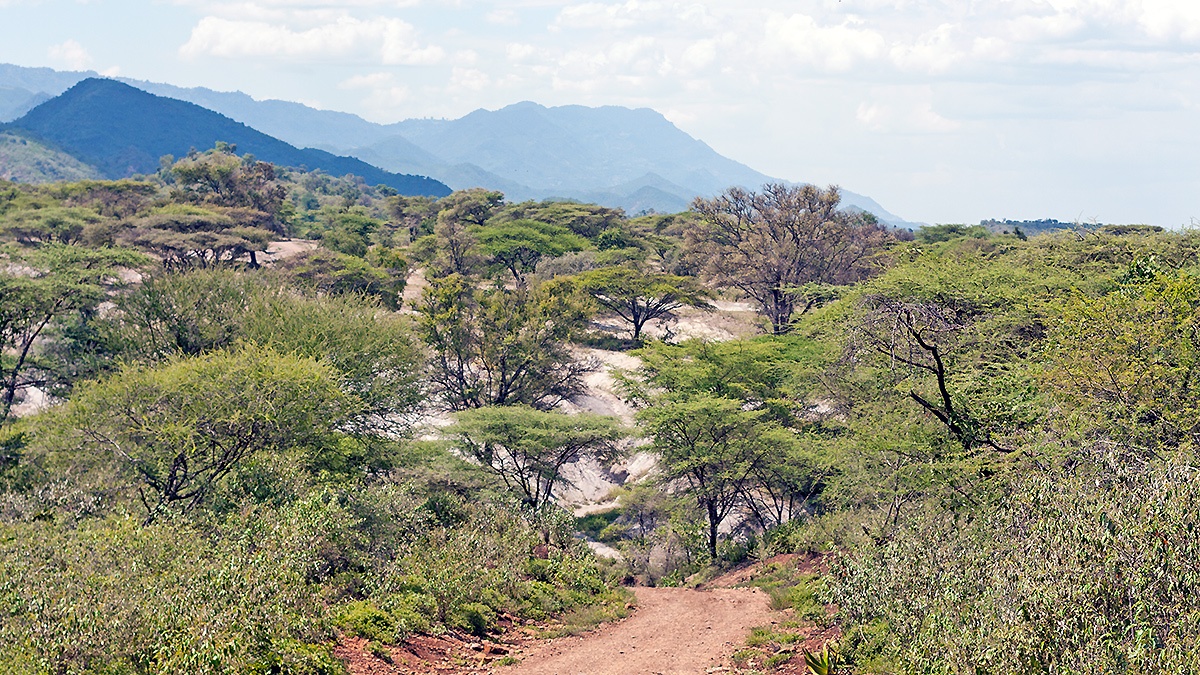
Today would take us down into the Kerio Valley, then up the eastern side through the town of Kabarnet and then back down to Lake Baringo in the eastern part of the Rift Valley. First though we spent some time birding the hotel grounds and then fields in the local area.
I was able to photograph two species already seen on the trip, Northern Yellow White-eye and Black-and-white-casqued Hornbill. Added to the trip list were three swifts, African Black Swift, Mottled Swift, first seen in Guinea in February this year, and a lifer in Nyanza Swift. Other lifers were Fan-tailed Raven, Jackson’s Widowbird and Red-cowled Widowbird.
On our descent into the Kerio Valley we picked up Crowned Hornbill, Northern Red-billed Hornbill, Black-headed Oriole, White-browed Sparrow-Weaver, Northern White-crowned Shrike, Spotted Palm Thrush and Slate-colored Boubou. The last three were lifers.
From Kabarnet we took the road east to Marigat, but branched off before Marigat onto sand and gravel roads in the Sabor area. We were now on home turf for Moses. Baringo is where he grew up and he has an intimate knowledge of the birds of this area. It proved to be particularly ‘birdy’ with many more lifers – Rufous Chatterer, Blue-naped Mousebird, Northern Red-fronted Tinkerbird, Silverbird, White-bellied Canary, Red-fronted Barbet, Speckle-fronted Weaver, Little Weaver, Eastern Violet-backed Sunbird, Abyssinian Scimitarbill, White-bellied Go-away-bird, Northern Crombec, Yellow-spotted Bush Sparrow, Nubian Woodpecker, White-headed Buffalo Weaver, White-billed Buffalo Weaver, Bristle-crowned Starling and Red-faced Crombec.
In mid-afternoon we checked in at our overnight accommodation, the Soi Safari Lodge on the west shore of Lake Baringo, so still had plenty daylight left for some more birding. We headed north along the west shore of the lake, but to places off the beaten track that Moses knew very well. We added Parrot-billed Sparrow, Black-headed Lapwing, Pygmy Batis, Acacia Tit, D’Arnaud’s Barbet, Common Ostrich, Vitelline Masked Weaver and Red-billed Oxpecker. Returning to Soi Safari Lodge I managed to photograph a Golden-backed Weaver (seen previously near Kisumu) and another lifer, Red-and-yellow Barbet.
![Eastern Violet-backed Sunbird [Anthreptes orientalis]](https://neilswildlifejournal.uk/wp-content/gallery/nectariniidae/IMG_0017_EOS-1D_Baringo_26Sep2010.jpg "Eastern Violet-backed Sunbird [Anthreptes orientalis]")
![Pygmy Batis [Batis perkeo]](https://neilswildlifejournal.uk/wp-content/gallery/platysteiridae-malaconotidae-vangidae-artamidae-aegithinidae-campephagidae-vireonidae/IMG_0005_EOS-1D_Baringo_26Sep2010.jpg "Pygmy Batis [Batis perkeo]")
![Northern Yellow White-eye [Zosterops senegalensis jacksoni]](https://neilswildlifejournal.uk/wp-content/gallery/sylviidae-zosteropidae-timaliidae-leiothrichidae-promeropidae-irenidae-troglodytidae/IMG_0010_EOS-1D_KerioView_26Sep2010.jpg "Northern Yellow White-eye [Zosterops senegalensis jacksoni]")
![Little Weaver [Ploceus luteolus kavirondensis]](https://neilswildlifejournal.uk/wp-content/gallery/passeridae-ploceidae/IMG_0023_EOS-1D_Baringo_27Sep2010.jpg "Little Weaver [Ploceus luteolus kavirondensis]")
![Bristle-crowned Starling [Onychognathus salvadorii]](https://neilswildlifejournal.uk/wp-content/gallery/polioptilidae-sittidae-certhiidae-mimidae-sturnidae-buphagidae/IMG_0013_EOS-1D_Baringo_26Sep2010.jpg "Bristle-crowned Starling [Onychognathus salvadorii]")
![Black-and-white-casqued Hornbill [Bycanistes subcylindricus subquadratus]](https://neilswildlifejournal.uk/wp-content/gallery/post-images-2009-2010/IMG_0045_EOS-1D_KerioView_26Sep2010.jpg "Black-and-white-casqued Hornbill [Bycanistes subcylindricus subquadratus]")
![Rufous Chatterer [Turdoides rubiginosa rubiginosa]](https://neilswildlifejournal.uk/wp-content/gallery/post-images-2009-2010/IMG_0046_EOS-1D_nrBaringo_26Sep2010.jpg "Rufous Chatterer [Turdoides rubiginosa rubiginosa]")
![White-bellied Go-away-bird [Corythaixoides leucogaster]](https://neilswildlifejournal.uk/wp-content/gallery/post-images-2009-2010/IMG_0047_EOS-1D_nrBaringo_26Sep2010.jpg "White-bellied Go-away-bird [Corythaixoides leucogaster]")
![Red-and-yellow Barbet [Trachyphonus erythrocephalus erythrocephalus]](https://neilswildlifejournal.uk/wp-content/gallery/post-images-2009-2010/IMG_0048_EOS-1D_Baringo_26Sep2010.jpg "Red-and-yellow Barbet [Trachyphonus erythrocephalus erythrocephalus]")
![Golden-backed Weaver [Ploceus jacksoni]](https://neilswildlifejournal.uk/wp-content/gallery/post-images-2009-2010/IMG_0072_EOS-1D_Baringo_26Sep2010.jpg "Golden-backed Weaver [Ploceus jacksoni]")
![Speckle-fronted Weaver [Sporopipes frontalis emini]](https://neilswildlifejournal.uk/wp-content/gallery/post-images-2009-2010/IMG_0073_EOS-1D_Baringo_26Sep2010.jpg "Speckle-fronted Weaver [Sporopipes frontalis emini]")
Day 7: 27 September
I was out birding in the hotel grounds before breakfast and added photos of two species seen yesterday, Blue-naped Mousebird and Eastern Violet-backed Sunbird as well as adding Mourning Collared Dove to the trip list.
After breakfast Moses had organised a boat so that we could bird along the shore. A further two birds that were seen yesterday were photographed, White-headed Buffalo Weaver and Spotted Palm Thrush. Many common birds were added to the trip list, such as Pied, Malachite and Woodland Kingfisher, Little, Purple and Squacco Heron, African Swamphen and Whiskered Tern. Highlight of the boat ride was a visit to the small island of Parmalok, in the middle of the lake some 4km off the shore. Here Moses was able to point out Banded Martin, one that I am very familiar with in South Africa and a rather special lifer, Senegal Thick-knee, right on the south-eastern extremity of its distribution range. On the way back to shore Moses began holding up small fish to encourage an African Fish Eagle that was circling above to take the bait. Moses had obviously done this many times before. The Fish Eagle eventually dived down and snatched up in its talons one of the fish thrown by Moses as it hit the water surface. Alas, it was so close that my camera’s auto-focus failed to adjust quickly enough and I got a slightly out of focus shot, the double whammy being that even that was lost with the hard drive crash.
Back at the lodge I was able to add Northern Masked Weaver and Eurasian Hoopoe before lunch. After lunch Moses took me to several of his special places, which required a fair bit of walking. Nobody birding without a local guide would know about these places. One site added Three-banded Courser, and Brown Babbler, both lifers, as well as the actual target of this particular place, Slender-tailed Nightjar. Moses had been in touch with his local network of spotters and we were taken to where it was resting (or nesting, not sure which). Others seen in this area included Namaqua Dove, Laughing Dove, White-crested Helmetshrike, Klaas’s Cuckoo, Diederik Cuckoo, African Pipit, Northern White-faced Owl, Pygmy Falcon, Isabelline Wheatear, Jackson’s Hornbill and Yellow-bellied Eremomela.
At a second site Moses conjured up another lifer, Hemprich’s Hornbill, as well as a second Fan-tailed Raven of the trip, but still no photo, and a Northern Wheatear.
A third site produced the lifers Eastern Yellow-billed Hornbill, Pink-breasted Lark and Mouse-colored Penduline Tit, as well as further trip additions with Green-winged Pytilia, Mocking Cliff Chat, African Grey Hornbill.
The fourth and last site added Verreaux’s Eagle.
![Eastern Violet-backed Sunbird [Anthreptes orientalis]](https://neilswildlifejournal.uk/wp-content/gallery/nectariniidae/IMG_0016_EOS-1D_Baringo_27Sep2010.jpg "Eastern Violet-backed Sunbird [Anthreptes orientalis]")
![Northern White-faced Owl [Ptilopsis leucotis]](https://neilswildlifejournal.uk/wp-content/gallery/strigiformes/IMG_0001_EOS-1D_Baringo_27Sep2010.jpg "Northern White-faced Owl [Ptilopsis leucotis]")
![Mouse-colored Penduline Tit [Anthoscopus musculus]](https://neilswildlifejournal.uk/wp-content/gallery/stenostiridae-paridae-remizidae-alaudidae/IMG_0002_EOS-1D_Baringo_27Sep2010.jpg "Mouse-colored Penduline Tit [Anthoscopus musculus]")
![Banded Martin [Neophedina cincta suahelica]](https://neilswildlifejournal.uk/wp-content/gallery/pycnonotidae-hirundinidae/IMG_0004_EOS-1D_Baringo_27Sep2010.jpg "Banded Martin [Neophedina cincta suahelica]")
![Northern Masked Weaver [Ploceus taeniopterus taeniopterus]](https://neilswildlifejournal.uk/wp-content/gallery/passeridae-ploceidae/IMG_0024_EOS-1D_Baringo_27Sep2010.jpg "Northern Masked Weaver [Ploceus taeniopterus taeniopterus]")
![Northern Masked Weaver [Ploceus taeniopterus taeniopterus]](https://neilswildlifejournal.uk/wp-content/gallery/passeridae-ploceidae/IMG_0025_EOS-1D_Baringo_27Sep2010.jpg "Northern Masked Weaver [Ploceus taeniopterus taeniopterus]")
![Blue-naped Mousebird [Urocolius macrourus pulcher]](https://neilswildlifejournal.uk/wp-content/gallery/post-images-2009-2010/IMG_0049_EOS-1D_Baringo_27Sep2010.jpg "Blue-naped Mousebird [Urocolius macrourus pulcher]")
![Senegal Thick-knee [Burhinus senegalensis]](https://neilswildlifejournal.uk/wp-content/gallery/post-images-2009-2010/IMG_0050_EOS-1D_Baringo_27Sep2010.jpg "Senegal Thick-knee [Burhinus senegalensis]")
![Three-banded Courser [Rhinoptilus cinctus emini]](https://neilswildlifejournal.uk/wp-content/gallery/post-images-2009-2010/IMG_0051_EOS-1D_Baringo_27Sep2010.jpg "Three-banded Courser [Rhinoptilus cinctus emini]")
![Jackson's Hornbill [Tockus jacksoni]](https://neilswildlifejournal.uk/wp-content/gallery/post-images-2009-2010/IMG_0052_EOS-1D_Baringo_27Sep2010.jpg "Jackson's Hornbill [Tockus jacksoni]")
![Slender-tailed Nightjar [Caprimulgus clarus]](https://neilswildlifejournal.uk/wp-content/gallery/post-images-2009-2010/IMG_0074_EOS-1D_Baringo_27Sep2010.jpg "Slender-tailed Nightjar [Caprimulgus clarus]")
![White-headed Buffalo Weaver [Dinemellia dinemelli dinemelli]](https://neilswildlifejournal.uk/wp-content/gallery/post-images-2009-2010/IMG_0075_EOS-1D_Baringo_27Sep2010.jpg "White-headed Buffalo Weaver [Dinemellia dinemelli dinemelli]")
![Hemprich's Hornbill [Lophoceros hemprichii]](https://neilswildlifejournal.uk/wp-content/gallery/post-images-2009-2010/IMG_0076_EOS-1D_Baringo_27Sep2010.jpg "Hemprich's Hornbill [Lophoceros hemprichii]")
![Spotted Palm Thrush [Cichladusa guttata guttata]](https://neilswildlifejournal.uk/wp-content/gallery/turdidae-muscicapidae-cinclidae-chloropseidae-dicaeidae/IMG_0012_EOS-1D_Baringo_27Sep2010.jpg "Spotted Palm Thrush [Cichladusa guttata guttata]")
Day 8: 28 September
My final day. There would be a brief side excursion to another one of Moses’s special places, then it would be straight down the main road to Nairobi and my flight to London via Amsterdam, to see my family there as well as visiting my father in Durham.
Moses had again been in contact with his team of spotters and was able to take me straight to the roosting spot of another lifer, Greyish Eagle-Owl. In the near vicinity I added additional lifers with Black-throated Barbet and Brown-tailed Rock Chat, as well adding Common Kestrel, Dark Chanting Goshawk and Shikra to the trip list.
Even once we were heading down the main road to Nairobi the list continued to grow. An Eastern Chanting Goshawk, another lifer, perched on a roadside tree just south of Marigat and then first a Secretarybird and then White Stork were seen in fields near Naivasha.
We arrived an hour early at the turn to Nairobi International so Moses directed the driver to keep going and threw in a final lifer at a reliable site he knew of on the road to Athi River, a Fischer’s Sparrow-Lark.
So, just to recap, a very memorable trip, with 354 species including 134 lifers. I can without reservation thoroughly recommend the guiding services of Moses Kandie to anyone wanting to undertake a similar customised birding trip.
![Greyish Eagle-Owl [Bubo cinerascens]](https://neilswildlifejournal.uk/wp-content/gallery/post-images-2009-2010/IMG_0053_EOS-1D_Baringo_28Sep2010.jpg "Greyish Eagle-Owl [Bubo cinerascens]")