
Lusaka, 04 Apr 2011
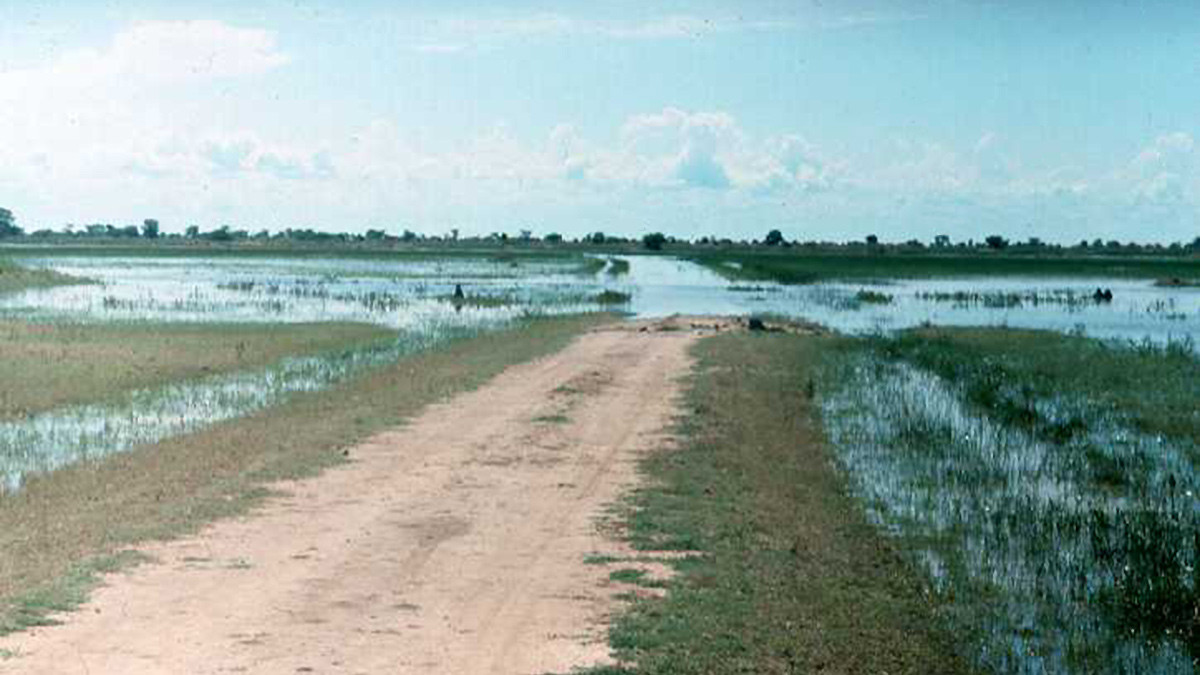
From my work base in Lusaka I decided to make use of two consecutive Sundays to take day trips to two of the three national parks closest to the capital, Blue Lagoon and Lochinvar. These are situated on opposites of the Kafue River, Blue Lagoon to the north and Lochinvar to the south. Biggest attraction in both is the bird life. While both lie on the Kafue floodplain, Lochinvar sees more extensive seasonal flooding of the grasslands than its northern neighbour. Maximum flooding is reached during May, which can make getting around the roads a bit problematic in years with high water levels.
Blue Lagoon was proclaimed in 1976 but closed to the public due to use of the area by the Zambian defence force, re-opening to the public as recently as 2003. Lochinvar was opened in 1972, and I visited from the Copperbelt in 1974, combining it with my first trip to the Victoria Falls, and then again on a dedicated birdwatching and game-viewing trip in 1976.
On Sunday 27th March I drove to Blue Lagoon, a relatively easy drive, initially heading west out of Lusaka on the main tar road towards Mumbwa, then turning off onto a gravel road heading south-west to Blue Lagoon. It is classed as an ‘undeveloped park’, meaning that there are no tourist facilities. Although it covers some 500km2 of the Kafue River floodplain, access is restricted to a 4.5km long causeway out to a stilted viewing platform with unrestricted views over the marshy floodplain. I found the road on the causeway to be in poor condition, partly due to the time of year, approaching the end of the wet season, but I fear also due to lack of maintenance. It is a single lane track and with the lush vegetation growing either side it might have been very difficult to find a passing place had a vehicle come from the opposite direction. I needn’t have worried on that score. I had the park to myself. The vegetation was also so lush that any birdwatching/game-viewing could only be done once at the end of the causeway.
I headed back to Lusaka with a disappointing tally of only 28 species, although I added 4 species to my growing Zambia list with Black Coucal, Pale-crowned Cisticola, African Crake and Purple Indigobird. Highlight of an uninspiring day – there really was one – was my best photo yet of Rufous-bellied Heron, which I saw for the first time, also in Zambia, almost 3 years ago at the Chembe Bird Sanctuary on the Zambian Copperbelt.
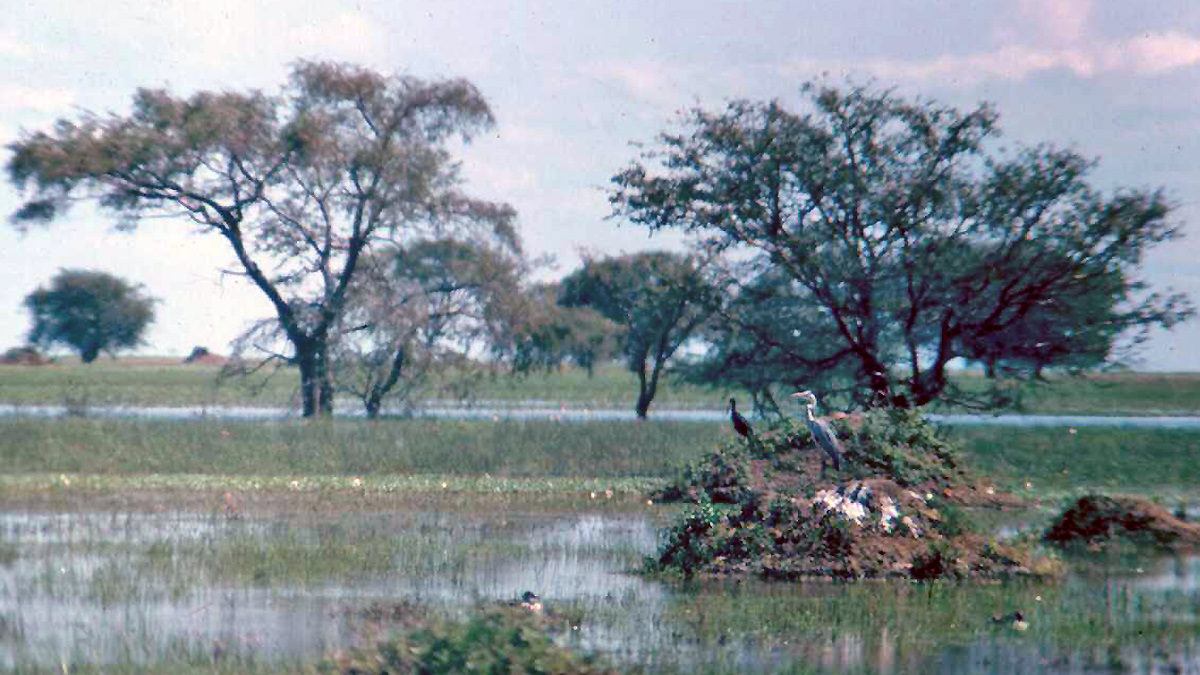
![Rufous-bellied Heron [Ardeola rufiventris]](https://neilswildlifejournal.uk/wp-content/gallery/pelecaniformes-opisthocomiformes/CN8E7962_EOS-1D_BlueLagoon_27032011.jpg "Rufous-bellied Heron [Ardeola rufiventris]")
![Rufous-bellied Heron [Ardeola rufiventris]](https://neilswildlifejournal.uk/wp-content/gallery/pelecaniformes-opisthocomiformes/CN8E7960_EOS-1D_BlueLagoon_27032011.jpg "Rufous-bellied Heron [Ardeola rufiventris]")
Yesterday, 3rd April, it was the turn of Lochinvar. Getting there takes a little longer as it lies on the south side of the Kafue River. As the Kafue has a very wide seasonal floodplain the only bridge crossings are at the town of Kafue, on the main highway south from Lusaka to Livingstone, where the river narrows considerably, and at Kafue Hook, an entrance to the Kafue National Park, some 360km upriver from Kafue.
It is not simply a matter of crossing the river. I had to drive 150km south-west to the small town of Monze, where I turned off onto gravel roads heading for 45km back north towards the Kafue River and Lochinvar National Park. The entrance gate at Lochinvar is situated amongst low hills in Combretum (bushwillow) woodland, which gives way to open grassland only a further 11-12km north of the gate, so there is much more opportunity to get in some good birding than at Blue Lagoon. Lochinvar boasts some 430 species. I didn’t do that well, with a trip list of 60 species, including Mosque Swallow, Meves’s Starling, Lappet-faced Vulture, Greater Honeyguide, Ruff, African Crake, Malachite Kingfisher, Little Bee-eater and 2 more additions to my Zambia list with Whiskered Tern and Chestnut-backed Sparrow-Lark.
Other wildlife was thin on the ground, with only some distant blue wildebeest and a single oribi seen. The main target species here is the Zambian endemic sub-species of the Red Lechwe, the Kafue Lechwe, found only along the floodplains of the Kafue River. I was just too early for the main flooding of the grasslands when the lechwe move away from the river into the inundated grasslands.
The grasslands seemed to have been invaded by thousands of yellow butterflies, which I believe are Common Grass Yellow.
Overall, not a bad day, but as with Blue Lagoon I was saddened to see how run-down and in need of maintenance are the roads and other facilities.
![Ruff [Calidris pugnax]](https://neilswildlifejournal.uk/wp-content/gallery/post-images-2011/CN8E7971_EOS-1D_Lochinvar_03Apr2011.jpg "Ruff [Calidris pugnax]")
![Malachite Kingfisher [Corythornis cristatus cristatus]](https://neilswildlifejournal.uk/wp-content/gallery/post-images-2011/CN8E7990_EOS-1D_Lochinvar_03Apr2011.jpg "Malachite Kingfisher [Corythornis cristatus cristatus]")
![Chestnut-backed Sparrow-Lark [Eremopterix leucotis smithi]](https://neilswildlifejournal.uk/wp-content/gallery/post-images-2011/CN8E7979_EOS-1D_Lochinvar_03Apr2011.jpg "Chestnut-backed Sparrow-Lark [Eremopterix leucotis smithi]")
![Red Lechwe [Kobus leche kafuensis]](https://neilswildlifejournal.uk/wp-content/gallery/post-images-2011/KafueLechwe_02May1976.jpg "Red Lechwe [Kobus leche kafuensis]")
![Common Grass Yellow [Eurema hecabe solifera]](https://neilswildlifejournal.uk/wp-content/gallery/post-images-2011/CN8E7982_EOS-1D_Lochinvar_03Apr2011.jpg "Common Grass Yellow [Eurema hecabe solifera]")