
Lusaka, 10 May 2011
Based currently in Lusaka in Zambia, I took a week’s leave and headed north for a 7-day birding trip, very ably organised for me by Thorn Tree Safaris. They supplied a vehicle, driver and assistant to take me to three specific destinations – Kasanka National Park, Shoebill Island and the Mutinondo Wilderness area. My primary goal was removing the Shoebill from No.1 spot on my birding “must see” list.
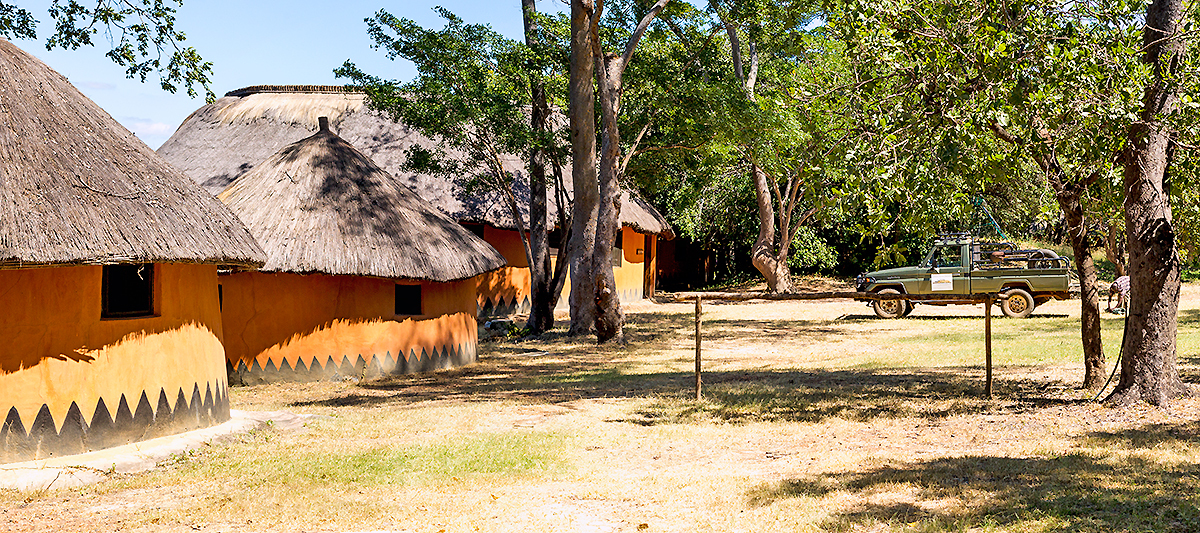
The first of these locations, Kasanka National Park, is an approximately 7-hour drive from Lusaka, sitting in Zambia at the end of the so-called “Pedicle” of the DRC that separates the Copperbelt from the remote northern Luapula Province. However, it was decided to break the journey in Mkushi, staying overnight at the Forest Inn. That way we could arrive at Kasanka early and get in an afternoon’s birding. Kasanka, although a national park, is run by the Kasanka Trust. Accommodation is either camping or chalets, but visitors to the chalets must supply all their own food. Kasanka supply the cooks. The chalets in the main Wasa Camp are situated in miombo woodland, an evergreen broad-leafed woodland dominated by brachystegia (‘miombo’ is the Swahili word for brachystegia), julbernardia and isoberlinia species. There is a closed canopy to the trees and only short grass grows in between. I also learnt that when the isoberlinia species are absent miombo morphs to chipya, also known as ‘Lake basin woodland’. The trees do not form a closed canopy, allowing sunlight to penetrate and tall grasses to grow. Chipya is also prone to fires in the dry season, and this gives these woodlands their name as ‘chipya’ means ‘burnt’ in the local language.
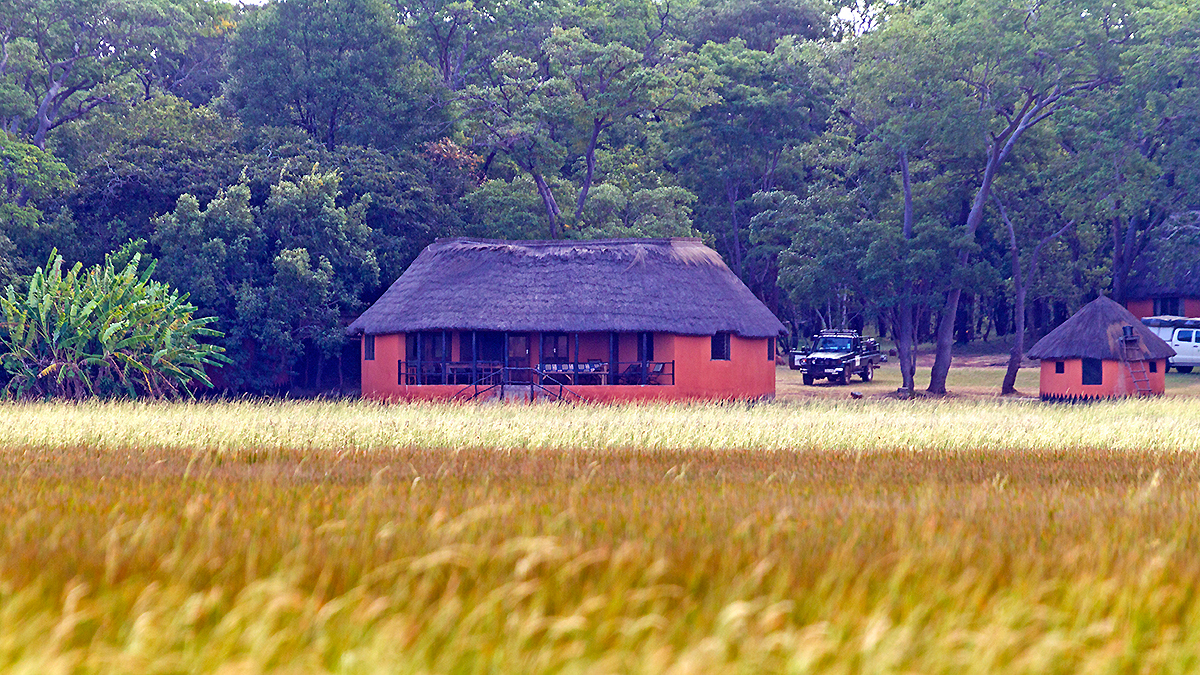
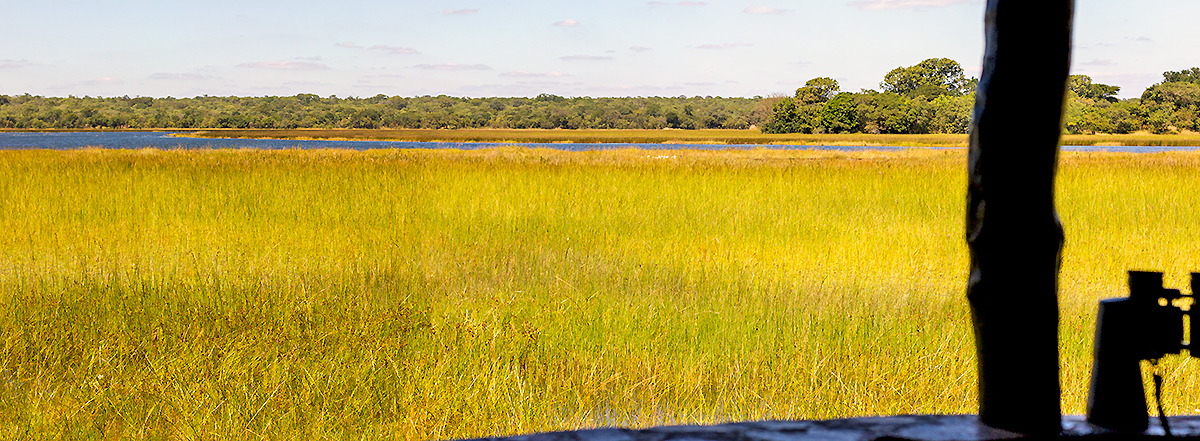
My hut overlooked Wasa Lake, home to many birds such as African Pygmy Goose, Rufous-bellied Heron and Lesser Moorhen, all of which were rather difficult to see through the long flooded grassland at the edges of the lake.
I arrived just after lunchtime and was able to do a circuit of Wasa Lake through the miombo with resident bird guide Webby, who certainly seems to know his bird calls and the habits of the local birds very well. A surprising sighting, only raptor of the walk, was a European Honey Buzzard. One of the miombo specials seen was Yellow-bellied Hyliota. Miombo birding is not for the faint-hearted, as it is “low density” birding – great species diversity, but no great numbers of anything. The secret is to latch onto one of the multi-species bird parties and follow them. As many of the species flit around in the canopy a stiff neck is also guaranteed, and also makes for ‘interesting’ angles for photos if you are even able to pin down any of these highly mobile birds. One I did manage to capture was a Yellow-fronted Tinkerbird.
![Lesser Moorhen [Paragallinula angulata]](https://neilswildlifejournal.uk/wp-content/gallery/gruiformes/CN8E8338_EOS-1D_KasankaNP_03May2011.jpg "Lesser Moorhen [Paragallinula angulata]")
![Yellow-fronted Tinkerbird [Pogoniulus chrysoconus extoni]](https://neilswildlifejournal.uk/wp-content/gallery/piciformes/CN8E8241_EOS-1D_KasankaNP_02May2011.jpg "Yellow-fronted Tinkerbird [Pogoniulus chrysoconus extoni]")
The next day I had a morning drive and walk, then a late afternoon drive with some walking, returning after dark, accompanied by Webby and Frank Willem, the resident ecologist for the Kasanka Trust. We got off to a great start when Frank pointed out an African Wood Owl roosting in a tree right outside his office and a Cabanis’s Bunting in a tree above our parked vehicle. Our first stop of the day was the Fibwe lookout, some 16m up a fig tree and overlooking extensive papyrus beds, home to one of Africa’s largest populations of the shy and elusive sitatunga, smallest member of the kudu family. Spotting a big male that might just make 2m to the tip of his horns in papyrus that grows to 4m is quite a challenge, but with the assistance of Frank’s spotting scope I eventually succeeded in adding sitatunga to my mammal list. Fibwe is situated in mushitu (riverine forest) and supports a somewhat different bird population to the miombo and chipya. Highlights here were a beautiful male Narina Trogon, Schalow’s Turaco, Purple-throated Cuckooshrike (lifer), Böhm’s Bee-Eater (lifer), Brown-headed Apalis (lifer), Black-backed Barbet, Yellow-rumped Tinkerbird and Pallid Honeyguide (lifer).
Less than 1km from Fibwe and a comfortable walk through the mushitu, is a viewing site on the edge of a dambo (seasonal wetland) for one of the truly remarkable sights of Africa – the annual migration and arrival at Kasanka of millions of Straw-coloured Fruit Bats, and then their departure a mere 2 months later. This spectacle takes place in November and December every year. In the dambo, however, I picked up Croaking Cisticola and another lifer in Anchieta’s Tchagra, southern counterpart of the west and central African Marsh Tchagra.
[P.S. Anchieta’s Tchagra is now regarded as a sub-species of the Marsh Tchagra]
The afternoon drive and walk targeted miombo species and I was not disappointed, adding more lifers in Western Violet-backed Sunbird, Black-necked Eremomela (a highly photogenic little bird, but it flits around on steroids so no hope of a photo), Böhm’s Flycatcher and one of my biggest bogey birds Arnot’s Chat.
Also photographed, on the grass fringing Wasa Lake outside my hut, was a Blue Basker dragonfly.
A highly successful day and a half at Kasanka to get the trip off to a good start, with a total of exactly 100 bird species seen including 9 lifers.
![African Wood Owl [Strix woodfordii woodfordii]](https://neilswildlifejournal.uk/wp-content/gallery/strigiformes/CN8E8356_EOS-1D_KasankaNP_03May2011.jpg "African Wood Owl [Strix woodfordii woodfordii]")
![Cabanis's Bunting [Emberiza cabanisi orientalis]](https://neilswildlifejournal.uk/wp-content/gallery/motacillidae-fringillidae-emberizidae-passerellidae/CN8E8364_EOS-1D_KasankaNP_03May2011.jpg "Cabanis's Bunting [Emberiza cabanisi orientalis]")
![Narina Trogon [Apaloderma narina narina]](https://neilswildlifejournal.uk/wp-content/gallery/coliiformes-trogoniformes-bucerotiformes/CN8E8265_EOS-1D_KasankaNP_03May2011.jpg "Narina Trogon [Apaloderma narina narina]")
![Böhm's Bee-eater [Merops boehmi]](https://neilswildlifejournal.uk/wp-content/gallery/coraciiformes/CN8E8305_EOS-1D_KasankaNP_03May2011.jpg "Böhm's Bee-eater [Merops boehmi]")
![Böhm's Bee-eater [Merops boehmi]](https://neilswildlifejournal.uk/wp-content/gallery/coraciiformes/CN8E8306_EOS-1D_KasankaNP_03May2011.jpg "Böhm's Bee-eater [Merops boehmi]")
![Black-backed Barbet [Pogonornis minor macclounii]](https://neilswildlifejournal.uk/wp-content/gallery/piciformes/CN8E8285_EOS-1D_KasankaNP_03May2011.jpg "Black-backed Barbet [Pogonornis minor macclounii]")
![Yellow-rumped Tinkerbird [Pogoniulus bilineatus mfumbiri]](https://neilswildlifejournal.uk/wp-content/gallery/piciformes/CN8E8251_EOS-1D_KasankaNP_03May2011.jpg "Yellow-rumped Tinkerbird [Pogoniulus bilineatus mfumbiri]")
![Marsh Tchagra [Bocagia minuta anchietae]](https://neilswildlifejournal.uk/wp-content/gallery/platysteiridae-malaconotidae-vangidae-artamidae-aegithinidae-campephagidae-vireonidae/CN8E8334_EOS-1D_KasankaNP_03May2011.jpg "Marsh Tchagra [Bocagia minuta anchietae]")
![Marsh Tchagra [Bocagia minuta anchietae]](https://neilswildlifejournal.uk/wp-content/gallery/platysteiridae-malaconotidae-vangidae-artamidae-aegithinidae-campephagidae-vireonidae/CN8E8324_EOS-1D_KasankaNP_03May2011.jpg "Marsh Tchagra [Bocagia minuta anchietae]")
![Böhm's Flycatcher [Myopornis boehmi]](https://neilswildlifejournal.uk/wp-content/gallery/post-images-2011/CN8E8359_EOS-1D_KasankaNP_03May2011.jpg "Böhm's Flycatcher [Myopornis boehmi]")
![Blue Basker [Urothemis edwardsii]](https://neilswildlifejournal.uk/wp-content/gallery/dragonflies/CN8E8343_EOS-1D_KasankaNP_03May2011.jpg "Blue Basker [Urothemis edwardsii]")